ATI TEAS Test: What It Is, What's on It, and How to Prepare in 2026
The ATI TEAS (Test of Essential Academic Skills) is the standardized admissions exam many U.S. nursing programs use. The current TEAS 7 has 170 questions (150 scored) over ~209 minutes across Reading, Math, Science, and English. Minimum scores vary by school.

As you search for information about the ATI TEAS test, most of what comes up is either outdated, wrapped in a sales pitch, or missing the details that actually matter before you sit down to study.
Here is the honest version.
Over 1,000 accredited BSN and ADN programs across the United States require a TEAS score as part of their admissions process. The average accepted applicant scores between 65% and 75%, and that gap between taking the test and getting into nursing school is almost entirely explained by one thing: understanding what the test actually measures before you start preparing for it.
The ATI TEAS is not a nursing knowledge test. It does not ask about medication dosages or patient care protocols. What it tests is whether you have the academic foundation to survive a nursing curriculum, and that distinction changes everything about how you should study. That is exactly what this guide covers.
What Is the ATI TEAS Test?
The ATI TEAS test is a standardized admissions exam developed by ATI Nursing Education, which stands for Assessment Technologies Institute. TEAS itself stands for Test of Essential Academic Skills. Most people hear the name and assume it tests nursing knowledge. It does not.

What it actually measures is whether you have the academic foundation to handle a nursing curriculum before you ever step into a clinical setting. Think of it as the academic checkpoint that stands between you and your nursing school seat. Its purpose is predictive: studies show that students who score well on the TEAS also tend to perform well in nursing school, which is precisely why admissions offices take it seriously.
Key Things to Know Before You Register
It is not the NCLEX. The NCLEX is the licensure exam you take after completing nursing school. The TEAS is the admissions exam you take to get in. They are entirely different tests with entirely different purposes.
It is not the HESI A2. Some nursing programs use the HESI A2 as their entrance exam instead of the TEAS. If your target program lists an admissions exam requirement, confirm which one they use before registering.
ATI publishes multiple exams. ATI also produces specialty proctored exams for students already enrolled in nursing programs. The TEAS is specifically the pre-admission version. If your program's admissions page simply says it requires an ATI exam, call and confirm it means the TEAS.
ATI TEAS at a Glance
Detail | Information |
|---|---|
Full name | Test of Essential Academic Skills |
Publisher | ATI Nursing Education (Assessment Technologies Institute) |
Current version | TEAS 7 (released June 2022) |
Total questions | 170 (150 scored and 20 unscored) |
Total time | 209 minutes |
Sections | Reading, Mathematics, Science, English and Language Usage |
Used by | Most accredited BSN and ADN programs in the United States |
Where to register |
The current version, TEAS 7, has been in use since June 3, 2022. ATI updates the exam roughly every five years, and no major version change is planned for 2026. If you come across study materials referencing TEAS 6, set them aside.
What Is on the ATI TEAS Test? (All 4 Sections Explained)
The TEAS 7 covers four sections. Each one is timed separately and tests a distinct set of skills. Of the 170 total questions, 150 are scored and 20 are unscored pretest items embedded throughout the exam. You will not know which questions are unscored, so treat every single one as if it counts toward your final score.
TEAS 7 Section Breakdown
Section | Total Questions | Time Allowed | Scored Questions |
|---|---|---|---|
Reading | 45 | 55 minutes | ~39 |
Mathematics | 38 | 57 minutes | ~34 |
Science | 50 | 60 minutes | ~44 |
English and Language Usage | 37 | 37 minutes | ~33 |
Total | 170 | 209 minutes | 150 |
One important update from earlier TEAS versions: TEAS 7 introduced several new question formats beyond standard four-option multiple choice. You may encounter select-all-that-apply, fill-in-the-blank, ordered response, hot spot and numeric entry questions. This is a significant shift from TEAS 6, and one of the biggest reasons older study materials can leave you underprepared.
Reading
The Reading section tests how well you extract meaning and structure from written material. You will work through written passages, charts and diagrams, pulling out key ideas and understanding how information connects across different sources. It rewards candidates who read carefully and patiently, not those who skim.
Three core skills are tested here:
Key ideas and details (identifying main ideas, supporting evidence and inferences from text)
Craft and structure (understanding how text is organized and how language choices affect meaning)
Integration of knowledge and ideas (connecting information across multiple sources including graphics and data)
The Reading section is more about analytical precision than speed. Practicing close reading with timed passages is the most effective preparation strategy here.
Mathematics
The ATI TEAS Math section covers two main content areas: numbers and algebra plus measurement and data. Expect word problems, unit conversions, ratios, proportions, basic statistics and algebraic equations.
One critical detail that many candidates miss: you only get a four-function on-screen calculator and only for questions where ATI permits it. No scientific calculator is allowed. You also cannot bring your own. This matters because some problems are genuinely faster to work by hand than to wrestle with a limited calculator, and practicing that judgment is part of your prep.
TEAS 7 added more questions on measurement and data compared to earlier versions. Medical conversions like teaspoons to millilitres and ounces to millilitres also appear in word problems, which reflects the practical numeracy skills nursing programs expect.
Science
This is the section that determines outcomes for most candidates. Not because it is unfairly hard, but because it is content-heavy in a very specific way that many prep guides fail to clearly explain.
The Science section is built around four content areas:
Human anatomy and physiology (the dominant topic and the one most directly tied to your nursing prerequisites)
Biology (cell biology, genetics and life science fundamentals)
Chemistry (basic chemical reactions, properties of matter and scientific reasoning)
Scientific reasoning (interpreting data, designing experiments and drawing conclusions from evidence)
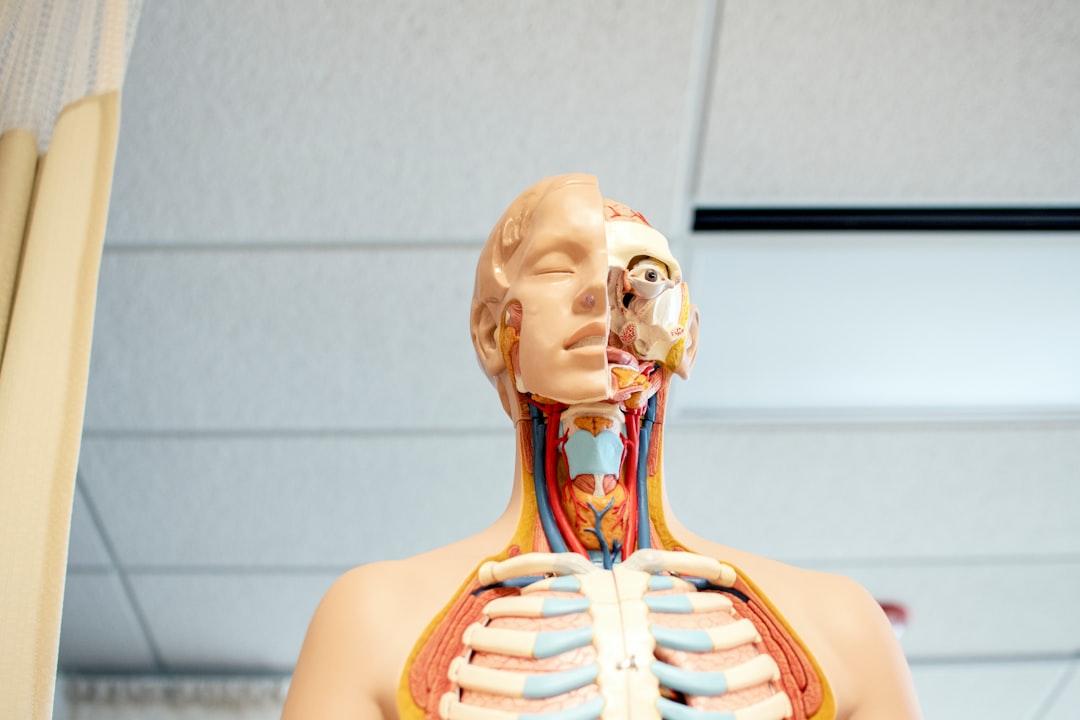
A&P content is dominant within the Science section, and it maps almost directly onto the A&P I and A&P II prerequisite courses that most nursing programs require. If you finished those courses recently with strong grades, your Science prep is largely review. If it has been several years since you sat in an A&P classroom, this is where you spend the most study time. TEAS 7 also added content on infectious and non-infectious diseases compared to earlier versions, so any materials written before 2022 will leave gaps here.
The Science section is not something you can reason your way through without content knowledge. That is the critical distinction between it and every other section on the ATI TEAS exam.
If you are a career changer who has not been in a science classroom for five or six years, do not assume your general intelligence will carry you through this section. The questions are specific. They ask about the structures of the human body, how organ systems interact, how cells divide and how chemical reactions work at a fundamental level. None of that comes from common sense. It comes from study. The good news is that the content is finite and well-defined by ATI's blueprint. You are not studying an open-ended subject. You are studying a specific list of topics that ATI publishes, which means a targeted prep plan covers the Science section more efficiently than almost any other approach.
English and Language Usage
This section is consistently underestimated and consistently punishes candidates who ignore it. It covers conventions of standard English, grammar, knowledge of language and vocabulary acquisition.
Three areas are tested:
Conventions of standard English (punctuation, grammar, sentence structure)
Knowledge of language (clarity, style and word choice in context)
Vocabulary acquisition (using context clues to determine meaning and understanding word relationships)
Candidates who pour all their prep time into Science and treat English as an afterthought routinely lose points they had no reason to lose. It is 37 questions in 37 minutes, which means you have exactly one minute per question on average. Pace matters here.
How Is the ATI TEAS Scored?
Your TEAS score report breaks down into three layers, and understanding each one changes how you interpret your results and set your target.

The Three Parts of Your Score Report
1. Composite Score (AITS)
Your Adjusted Individual Total Score is a percentage reflecting your weighted performance across all four sections. This is the number most nursing programs use when setting their admissions cut-off. It appears prominently at the top of your score report.
2. National Percentile Rank
This tells you where your score lands compared to other ATI TEAS test-takers in ATI's national norming group. A 70th percentile rank does not mean you scored 70 percent correct. It means you scored higher than 70 percent of all other candidates in the norming group. That distinction is important, and it is one that frequently catches first-time test-takers off guard when reading their reports.
3. Individual Section Scores
You receive a separate percentage score for each section. These help both you and your target programs understand where your strengths and weaknesses lie. Some programs set minimum scores not just for the composite but for individual sections, particularly Science and Math.
ATI TEAS Score Performance Bands
ATI classifies scores into five official performance levels:
Performance Band | Score Range |
|---|---|
Exemplary | 92% to 100% |
Advanced | 80% to 91.3% |
Proficient | 58.7% to 79.3% |
Basic | 40.7% to 58% |
Developmental | Below 40.7% |
Source: *OpenExamPrep*
What Is a Good TEAS Score?
ATI does not set a universal passing score. Every program sets its own minimum. Here is what the landscape typically looks like in 2026:
Program Type | Typical Minimum | Competitive Range |
|---|---|---|
ADN programs | 55% to 65% | 65% to 70% |
BSN programs | 65% to 75% | 75% to 80% |
Accelerated BSN | 70% to 75% | 80% to 85% |
Highly selective BSN | 78%+ | Top-quartile percentile |
The same 72 percent composite that comfortably clears one program's minimum may fall below another program's cut-off entirely. A rule of thumb worth following: aim for 10 to 15 percentage points above your target school's stated minimum. Meeting the floor does not mean you are competitive. It means you are eligible to be considered.
Highly competitive BSN programs in states like Texas, California and New York routinely admit students scoring in the Advanced band at 80 percent and above. Community college ADN programs tend to be more accessible on the score front but often impose stricter limits on the number of attempts they will consider. Both facts point toward the same conclusion: knowing your specific target programs' requirements before you register is not optional preparation. It is the starting point of your entire strategy.
Always verify the exact score requirement directly with each program's admissions office. Third-party lists of school score minimums are frequently out of date and occasionally just wrong.
How Long Are TEAS Scores Valid?
TEAS scores are generally valid for two years from your test date. Individual programs may have stricter requirements. Verify the validity window with each school you are applying to before you book your exam date.
How to Access and Share Your Score Report
After testing, your Individual Performance Profile is posted to your ATI student account at atitesting.com. If you test through ATI directly, you receive a preliminary score immediately after finishing the exam. The finalized report is available within three business days, excluding weekends and public holidays.
One official transcript credit is included with your registration. Additional transcripts cost \$27 each and can be purchased through the ATI store. Transcripts are sent electronically to your chosen institution, typically within 48 hours of your submission request.
Not Sure If Your Target Score Is Realistic?
Before you register, it is worth knowing exactly which sections are pulling your average down and which ones you can gain points on quickly. Testavia's TEAS prep program gives you a free diagnostic to find that out. With a 99% pass rate and a topic-based video library built specifically around the TEAS 7 blueprint, it is designed for candidates who want a structured path to a competitive score, not just a collection of practice questions. The diagnostic takes minutes and costs nothing.
How Do You Register for the ATI TEAS?
There are two ways to register, and which one you use depends on whether your program arranges its own testing or directs you to ATI. Our step-by-step TEAS application guide walks through each path, and the full TEAS test cost breakdown covers what to budget.
Pathway 1: Register Through ATI Directly
This is for candidates booking a seat at a PSI testing center or sitting the exam remotely from home. Here is the step-by-step process:
Create an account at atitesting.com
Log in and navigate to the online store
Select Register for the TEAS and choose your testing format
Browse available dates and testing locations then select your preferred slot
Pay the registration fee and wait for your confirmation email
Cost: TEAS at ATI and PSI testing centers is \$120. Remote proctoring through ATI is also available at the same price.
Pathway 2: Register Through Your Nursing School
Some programs administer the ATI TEAS test on-campus themselves. In that case, you register and pay through the school rather than ATI. Fees at institutions typically range from \$70 to \$110 depending on the school. If your target program arranges its own testing, check their admissions page first before going to ATI's website directly.
What to Bring on Test Day
You need a valid government-issued photo ID with a signature. Accepted forms include a driver's licence, passport, state-issued ID and military ID. The ID must be current and valid. Do not show up without one. ATI does not issue refunds for candidates denied entry due to insufficient identification.
Important Logistics Before You Book
Book 4 to 8 weeks ahead to secure your preferred date, time and testing location
Rescheduling costs \$15 and must be requested at least 48 hours before your exam date
No rescheduling is possible within 48 hours of your exam and ATI does not issue refunds for missed exams
Remote proctoring is available but not all nursing programs accept remotely proctored scores. Confirm with each of your target programs before choosing that format
Score reports take up to three business days to finalise, so factor that into your application deadlines
If your target school administers the TEAS on-campus, register through them rather than ATI directly. The process, cost and any additional requirements will come from the school's admissions team.
One detail that often gets missed at the registration stage: when you book a seat through ATI, you can select which nursing program receives your official transcript as part of the registration process. If you are applying to multiple programs, you will need to purchase additional transcript credits at \$27 each through the ATI store. Transcripts do not transfer automatically. You have to actively send them, and doing so before application deadlines is your responsibility, not ATI's. Build that step into your application timeline from the start.
How Many Times Can You Take the ATI TEAS? (Retake Policy)
You can retake the ATI TEAS. But the retake policy has more layers than most guides explain, and understanding those layers before you book your first attempt can save you from a costly mistake.
ATI's Minimum Wait Period
For TEAS exams taken through ATI or PSI testing centers, ATI requires a minimum 14-day wait between attempts. That is ATI's floor. It is not the standard most nursing programs operate by.
What Your Program Adds on Top
Most nursing schools impose stricter limits. Many require a 30-day minimum between attempts. Several limit candidates to two or three TEAS test attempts per admissions cycle or within a 12-month period. Some programs only consider your most recent score. Others average all of your attempts.
That averaging policy is the one that catches candidates off guard most often. Retaking without genuinely improving your score is not a neutral outcome at those programs. It can actively lower your standing in the applicant pool.
Before You Book a Retake: Two Questions to Ask Admissions
Contact the admissions office at every program you are applying to and ask these two things directly:
How many TEAS attempts do you accept within one admissions cycle?
Do you take the highest score or average all attempts?
Get the answer in writing if you can. Programs can and do update their policies between application cycles, and a verbal answer from a website that has not been updated in two years is not something you want to rely on.
Score Validity Still Applies to Retakes
TEAS scores are valid for two years. If you retake the exam, both scores appear in your ATI account history. Programs that review all attempts will see every score on record, regardless of which one you choose to report.
The Strategic Case for Getting It Right the First Time
One well-prepared first attempt is almost always more efficient than a rushed attempt followed by a retake cycle. The registration fee is \$120 at ATI testing centers each time. There is no discount for retakes. If you are not ready, it is better to push your exam date than to sit for a test you are underprepared for and then scramble to improve before the next admissions deadline.
If you are in a genuine preparation gap and working with a real exam date on the calendar, Testavia's nursing school prep program is built for exactly that situation. On-demand video lessons, weekly study plans aligned to the TEAS 7 blueprint and smart test banks that target your weak sections rather than making you re-cover ground you already know. With a 99% pass rate across their students, it is not a generic study guide. It is a structured path to a score your target programs will accept.
Written by · Verified educator
Testavia editorial
Nathan Cole
RN
Medical-Surgical nurse & health writer
Meet Nathan, a registered nurse with over five years of experience in Medical-Surgical care, based in New York City. Having worked with a wide range of patients through some of their most vulnerable moments, Nathan brings a grounded, real-world perspective to his writing on healthcare. His goal is simple: to bridge the gap between medical knowledge and everyday understanding, making health topics feel less intimidating and more empowering for everyone. When he's not caring for patients, Nathan channels his passion for medicine into writing that educates, comforts and inspires.
5+
Years in Med-Surg
Medical-Surgical
Specialty
New York City
Based in