What Does NCLEX Stand For? Meaning, RN vs PN & Purpose
NCLEX stands for National Council Licensure Examination — and each word tells you something about the exam. Here is what every letter means, the difference between the NCLEX-RN and NCLEX-PN, who NCSBN is, why the exam exists, and the exact steps from graduation to your nursing license.

NCLEX stands for the National Council Licensure Examination — the standardized test you must pass to be licensed as a nurse in the United States, as either a Registered Nurse (NCLEX-RN) or a Licensed Practical/Vocational Nurse (NCLEX-PN). Each word in the name tells you something useful about what the exam is, why it exists, and what it measures. Here is the full breakdown, the difference between the RN and PN versions, who runs it, and the exact steps from graduation to your license.
NCLEX stands for: breaking down every word
The acronym expands to N — National, C — Council, L — Licensure, E — Examination. Each word describes the exam's structure and purpose:
Letter | Word | What it means in practice |
|---|---|---|
N | National | The same exam is used in all 50 states and U.S. territories — a passing score anywhere is a passing score everywhere. |
C | Council | Refers to NCSBN, the nonprofit that develops and owns the exam and brings all state boards under one shared framework. |
L | Licensure | A licensure exam, not a certification — a government legal authorization to practice. Without it you cannot work as a nurse regardless of your degree. |
E | Examination | A standardized, computer-administered test delivered through Pearson VUE — a knowledge and judgment exam under proctored conditions, not a skills observation. |
Put simply: the NCLEX is an examination developed by the National Council (NCSBN) to determine who receives a nationally recognized, government-issued license to practice nursing.
NCLEX-RN vs. NCLEX-PN: what the letters after the dash mean
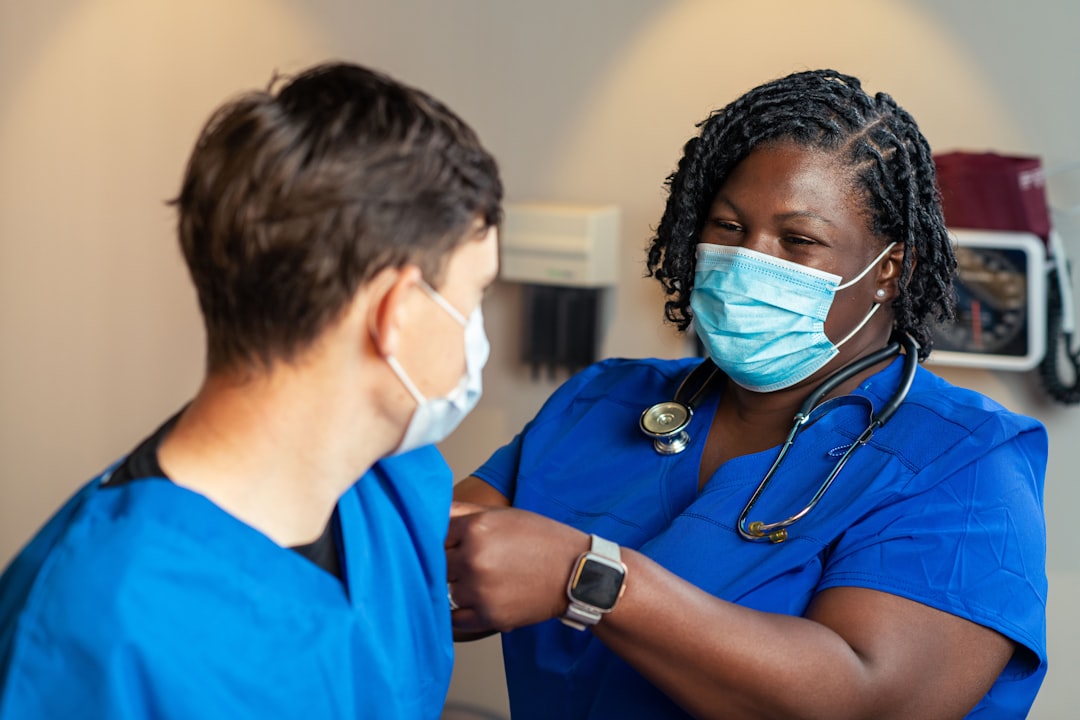
The two-letter suffix tells you which license the exam leads to — not two difficulty tiers of the same test. NCLEX-RN stands for National Council Licensure Examination – Registered Nurse: the license you earn after an ADN or BSN, for nurses who hold primary, independent accountability for patient care and may supervise LPNs and UAP. NCLEX-PN stands for National Council Licensure Examination – Practical Nurse: licensure as an LPN (or LVN in California and Texas), typically after a 12-to-18-month program, working under RN, APRN, or physician supervision in a more focused, procedural scope.
Feature | NCLEX-RN | NCLEX-PN |
|---|---|---|
License earned | RN (Registered Nurse) | LPN / LVN |
Education required | ADN or BSN | Practical/vocational diploma or certificate |
Scope of practice | Independent, supervisory | Supervised, collaborative |
Item range / time | 85–150 questions / 5 hours | 85–150 questions / 5 hours |
You sit for the exam that matches your education: an ADN or BSN graduate takes the NCLEX-RN; a practical-nursing graduate takes the NCLEX-PN. The item-count rules are identical — see how many questions are on the NCLEX — but the content scope differs, so use the right NCLEX practice questions for your track.
What is NCSBN? The organization behind the name
The "National Council" in NCLEX is NCSBN — a not-for-profit founded in 1978 and headquartered in Chicago, whose members are the nursing regulatory bodies of all 50 states, D.C., and U.S. territories (about 59 member boards as of 2026, plus participating Canadian provinces). It was created as a separate entity from the American Nurses Association on the principle that nursing regulation and professional advocacy are distinct functions. NCSBN is responsible for:
Developing and updating the NCLEX test plans — the blueprints, revised every three years.
Setting the passing standard through a rigorous standard-setting process involving practicing nurses and educators.
Administering the exam globally by contracting with Pearson VUE to deliver it.
Running the Nursys database — national license verification.
Developing the Nurse Licensure Compact — the multistate-license agreement. See our guide on how to get a compact nursing license.
The division of labor is worth memorizing: NCSBN develops the exam, Pearson VUE delivers it, and your state Board of Nursing licenses you — three distinct organizations with three distinct roles.
Why does the NCLEX exist?
The core mission is simple: protect the public by ensuring nurses are competent to practice safely. A nursing license is a government legal authorization, not an employment credential — without a standardized licensure process, a patient would have no assurance their nurse met a consistent, validated level of competency. The NCLEX is how states verify every new nurse meets that threshold before being authorized to practice, which is why it tests clinical judgment and safe decision-making: NCSBN research consistently links clinical judgment to the majority of tasks entry-level nurses perform.
National standardization also matters because, before it, a nurse who met one state's standards might not meet another's. A single national exam solves that — and it is what makes the Nurse Licensure Compact (one license valid in 40+ states) possible, because the underlying exam is the same everywhere.
From graduation to license: the practical steps
Knowing what NCLEX stands for is one thing; knowing what to do after graduation is another. The path in five steps (covered in depth in our Pearson VUE NCLEX guide):
Apply for licensure with your state Board of Nursing. Once approved, the board notifies NCSBN and you receive an Authorization to Test (ATT).
Register with Pearson VUE and pay the $200 fee.
Schedule your exam using your ATT — valid for a set window, typically 90 days, so do not let it expire.
Prepare with resources aligned to the current test plan, practicing NGN formats and reviewing rationales. Build a plan with our NCLEX practice test guide and check the NCLEX pass rate to set your target.
Test and get your results. The computer-adaptive exam runs 85–150 items over up to 5 hours; Quick Results are available ~48 business hours after testing for a fee, with official results from your board to follow.

Written by · Verified educator
Testavia editorial
Nathan Cole
RN
Medical-Surgical nurse & health writer
Meet Nathan, a registered nurse with over five years of experience in Medical-Surgical care, based in New York City. Having worked with a wide range of patients through some of their most vulnerable moments, Nathan brings a grounded, real-world perspective to his writing on healthcare. His goal is simple: to bridge the gap between medical knowledge and everyday understanding, making health topics feel less intimidating and more empowering for everyone. When he's not caring for patients, Nathan channels his passion for medicine into writing that educates, comforts and inspires.
5+
Years in Med-Surg
Medical-Surgical
Specialty
New York City
Based in