Is Nursing School Hard? An Honest Look at What to Expect
Yes, nursing school is hard — but in a specific, survivable way. Here is what actually makes it tough, what a real week looks like, the habits that get students through, and how to know if it is worth it for you.
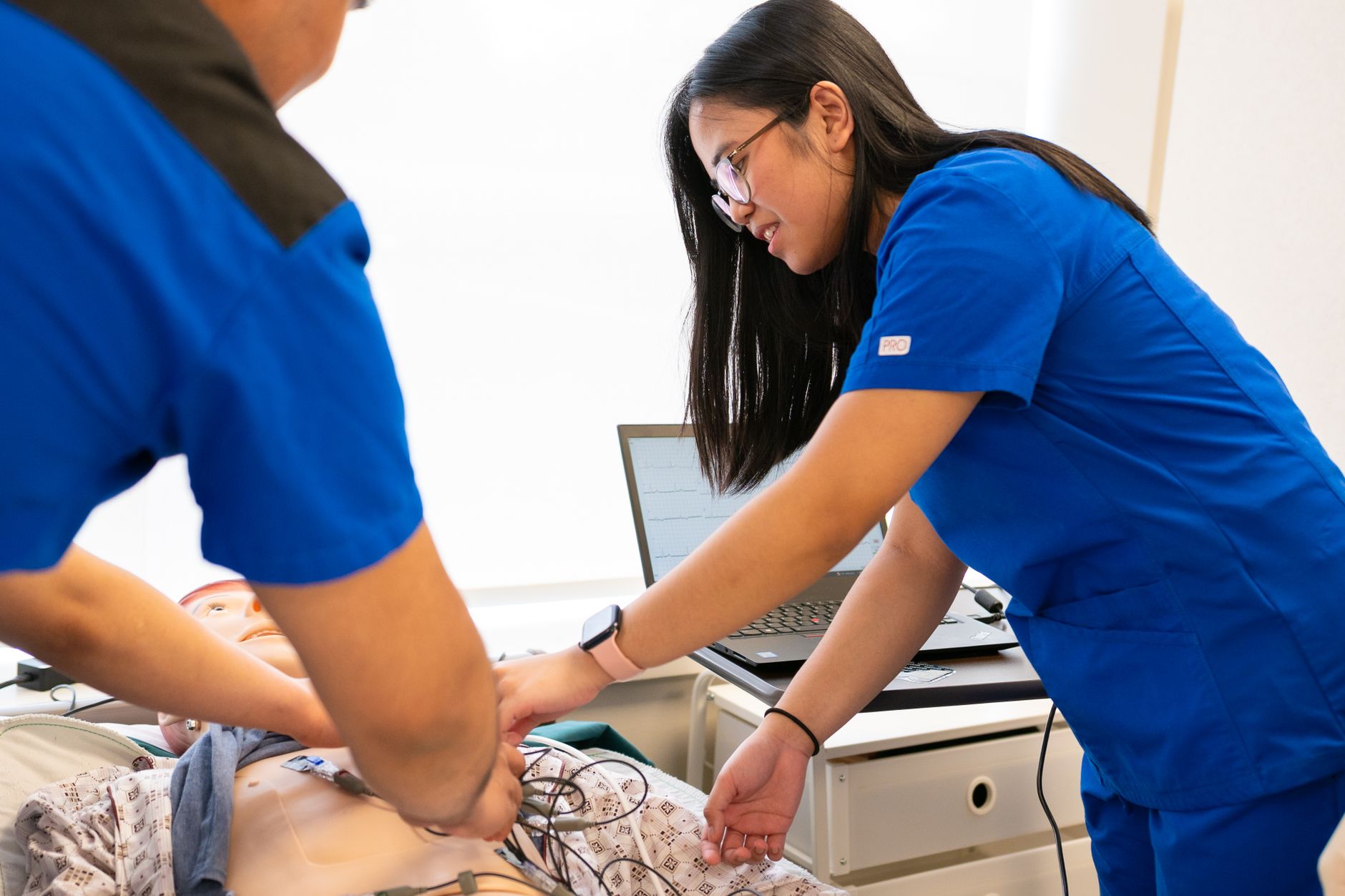
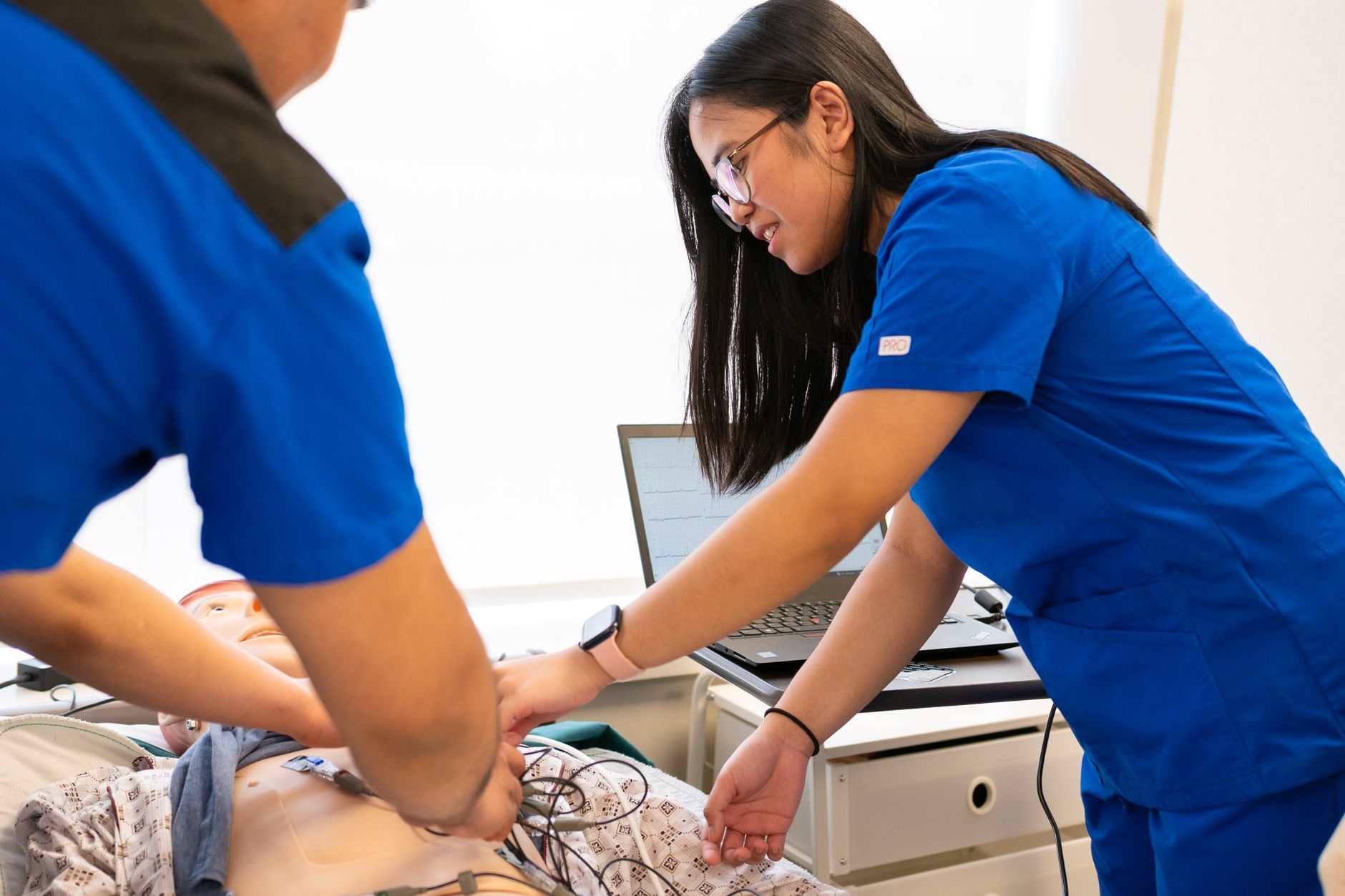
Short answer: yes, nursing school is hard — but not in the way people who "almost went pre-med" make it sound. It is not a secret club for geniuses with photographic memories, and it is not impossible. It is hard in a specific, predictable way: the volume of content is brutal, the pace never lets up, clinicals start early and run long, and the exams test how you think rather than what you memorized. Stack the emotional weight of caring for real people on top, and you get something genuinely demanding. The students who make it through are rarely the smartest in the room — they are the ones with a system and a support network. Here is what the difficulty actually looks like, and how to handle it.
So how hard is nursing school, really?
Hard enough that a meaningful share of students who start a program do not finish — attrition varies a lot by school, so check your own program's numbers rather than trusting a single national figure. The licensing exam at the end is no formality either. According to the National Council of State Boards of Nursing's 2024 NCLEX statistics, the NCLEX-RN first-time pass rate for U.S.-educated candidates was 91.2% — strong, but that still leaves nearly one in ten failing on the first try. Across all candidates (including repeat and internationally educated test-takers), the overall rate was 73.3%, and repeat U.S.-educated takers passed less than half the time (41.9%). So the difficulty is real and it is measurable.
Here is what those numbers do not tell you: most students who struggle are not too dumb for nursing. They struggle because no one warned them what was coming, or because they tried to study the way they did in undergrad bio — reread the notes, highlight, hope. That approach quietly fails in nursing school. The good news is that this is the most fixable reason to fail, and you are already ahead by reading about it now.

What actually makes nursing school hard
It is not one thing. It is the stack — several hard things happening at once.
The volume of content. In a single semester you might juggle pharmacology, pathophysiology, med-surg, mental health, and clinical skills. Each course would be hard alone; together they are a tidal wave. You are not just learning what a beta-blocker does — you are learning when not to give it, what to monitor, what to teach the patient, and what to do if the patient codes. With a quiz on it Friday.
The exams test thinking, not memorizing. This blindsides most students. NCLEX-style questions hand you four answers that all sound correct and ask for the most correct one — using clinical judgment, prioritization, and patient safety. A question will not ask you to define hyperkalemia; it will give you a 68-year-old on three meds with a potassium of 6.2 and ask what you do first. You have to think like a nurse, and nobody has ever asked you to do that before.
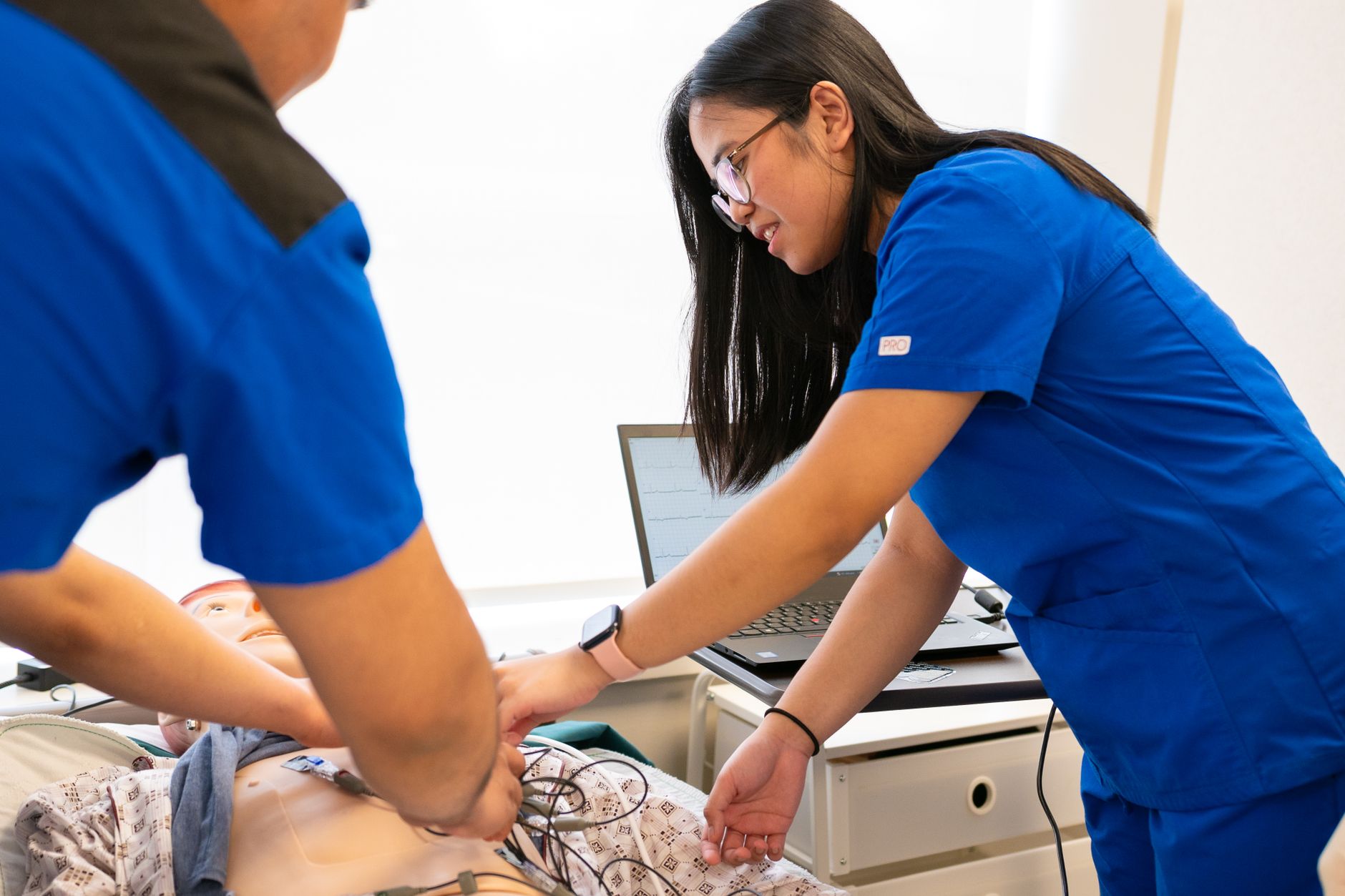
Clinicals are exhausting. Some shifts start before 6 a.m. and run 8 to 12 hours on your feet — lifting patients, running between rooms, trying to look calm while you panic about the IV pump — and then you still owe a care plan that night. Most students badly underestimate how draining this is.
The emotional weight is real. You will see things in clinicals that stay with you — a patient dying, a family falling apart, a child in pain — and you are expected to stay professional and keep moving. This is the part nobody talks about, and for many students it is the hardest. You can learn how to study; learning to carry the weight is harder. If you are struggling here, that is normal — talk to a counselor.
The grading curve is tough. Many programs require a 75% or higher — sometimes 78% — to pass each nursing course, so one bad exam can put a whole semester at risk. Add limited seats and a cohort of equally driven students, and the pressure is constant. (Everyone looks like they are handling it better than you. They are not — just hiding it better.)
What a typical week actually looks like
Here is a realistic sketch — not the worst case, not the best.
Day | What it tends to look like |
|---|---|
Monday | Patho lecture at 8, lab simulation at 1, three chapters to read by tomorrow, care plan due at midnight. |
Tuesday | Pharmacology lecture, a quiz, a group-project meeting. You skip lunch. Wednesday's med-surg exam looms. |
Wednesday | Med-surg exam. You think you failed. You probably did not. |
Thursday | Clinical prep. You get your patient in the afternoon and have until morning to research the chart, every med, every diagnosis. |
Friday | Clinical, early to evening. You drive home in silence, eat cereal for dinner, and collapse. |
Weekend | You promised yourself you'd relax. Instead you study Saturday, catch up Sunday, and reset. |
If your week looks like this, you are not failing — you are in nursing school. The volume is the point, which is exactly why time management is less a soft skill here and more a survival skill.
The skills that actually get you through
Smart students do not survive nursing school. Strategic ones do. Here is what separates them:
They learn how to study, not just what to study. Active recall, spaced repetition, and practice questions — not rereading notes for the sixth time. The best students treat NCLEX-style questions as their main study tool, not an afterthought.
They protect their sleep. Pulling all-nighters before exams is one of the fastest ways to tank. Your brain consolidates clinical reasoning during sleep, so skipping it sabotages the exact skill the exam measures.
They ask for help early. The first time something does not click — not the night before the final. Office hours, tutoring, a study group, a quick email to the professor. Use them before you are underwater.
They build a study system and commit. Pick your tools — a question bank, flashcards, a weekly review — and stick with them. Switching systems every two weeks burns time you do not have.
They triage their workload. Not every assignment deserves your A-game. A care plan for a patient you will never see again? Get it done and move on. Save your energy for the exam that actually moves your grade.
If exams are the thing breaking you specifically, the fix is almost always how you practice, not how much. We break that down in how to stop failing nursing exams.
The things nobody warns you about
A few honest truths most posts skip. You will doubt yourself constantly — even the top student in your cohort secretly thinks they are failing, which is why imposter syndrome is the unofficial mascot of nursing school. Your social life will shrink, and the friends who stick around are keepers. At some point you will probably cry, maybe over a grade, maybe over a patient, maybe just because you are exhausted — and none of that means you are not cut out for this. On the flip side, you will have moments where everything clicks: a patient thanks you, or you catch a subtle change in a vital sign nobody else noticed, and you realize you actually know what you are doing. Those moments are why people keep going.
Is it worth it?
For most people who genuinely want it, yes. Nursing is not just a job — it is a license that opens doors for the rest of your career: bedside, ICU, OR, education, informatics, travel nursing, leadership. The U.S. Bureau of Labor Statistics projects continued growth in registered-nurse employment over the coming decade, and professional bodies like the AACN consistently report strong demand. The country needs more nurses, not fewer.
That said, nursing is not for everyone. If you cannot handle bodily fluids, you will struggle. If you do not care about people, you will burn out fast. And if you are in it only for the paycheck, the workload will crush you long before the paycheck arrives. But if you are drawn to work that means something, the hard parts are survivable — and temporary. Nursing school does not last forever. The career it opens does.
What to do right now if you are overwhelmed
Pick one thing to fix this week. Not five. One — maybe your sleep, maybe how you study, maybe a conversation with your advisor.
Stop comparing yourself to the loudest student in your cohort. They are not doing better than you. They are just louder about it.
Do practice questions every single day. Even ten a day adds up — they are how you train your brain to think like a nurse.
Find one reliable study partner. Not a group of six. One person you can count on. Quality beats quantity.
If you are struggling emotionally, tell someone. A professor, a counselor, a friend — before you start thinking about quitting, not after.
And remember: every nurse you have ever met went through exactly this. All of them. They survived it, and so can you.
Written by · Verified educator
Testavia editorial
Nathan Cole
RN
Medical-Surgical nurse & health writer
Meet Nathan, a registered nurse with over five years of experience in Medical-Surgical care, based in New York City. Having worked with a wide range of patients through some of their most vulnerable moments, Nathan brings a grounded, real-world perspective to his writing on healthcare. His goal is simple: to bridge the gap between medical knowledge and everyday understanding, making health topics feel less intimidating and more empowering for everyone. When he's not caring for patients, Nathan channels his passion for medicine into writing that educates, comforts and inspires.
5+
Years in Med-Surg
Medical-Surgical
Specialty
New York City
Based in