3 Study Habits That Make Nursing Students Fail (and How to Fix Them)
If you study for hours and still fail nursing exams, the problem is usually how you study, not how much. Here are the three habits that quietly sink scores — cramming, passive rereading, and struggling alone — and the evidence-based fixes that replace them.

You read the chapters, reviewed your notes, put in the hours — and the exam grade still came back low. Here's the uncomfortable truth: nursing exams don't reward time spent, they reward how effectively you use that time. The students who pass consistently usually aren't smarter or more dedicated than you. They've stopped doing three things that feel productive but don't build the deep, applied understanding nursing exams demand: cramming, passive rereading, and struggling alone. Fix those three and your next exam looks very different — here's exactly how.
Habit 1: Cramming instead of spacing your study out
Cramming forces material into short-term memory. You might hold it long enough to sit the exam, but a week later it is gone — and nursing school builds on itself, so the cardiovascular content you crammed for Med-Surg I resurfaces in Med-Surg II, pharmacology, and the NCLEX. The spacing effect — one of the most robust findings in cognitive psychology — shows that learning distributed over several days produces far stronger long-term retention than the same hours massed into one session. Spacing works because each study session forces your brain to retrieve the material again, and every retrieval strengthens recall. Cramming skips that entirely.
The fix: start at least a week out and study one chunk a day, reviewing the previous day before adding new material. A sample week for a Monday exam:
7 days out — cardiovascular system overview.
Day 2 — review cardiovascular, add respiratory.
Day 3 — review both, add renal.
Day 4 — review all three, add neuro.
Day 5 — practice questions across all systems.
Day 6 — full timed practice exam.
Day 7 — light review of weak areas, then rest.
By exam day you have encountered the cardiovascular material six times. Block those 30–60 minute sessions in your calendar and treat them like clinical shifts — non-negotiable. Tight on time as it is? Pair this with smart time-management tactics for nursing students.

Habit 2: Passive rereading instead of active recall
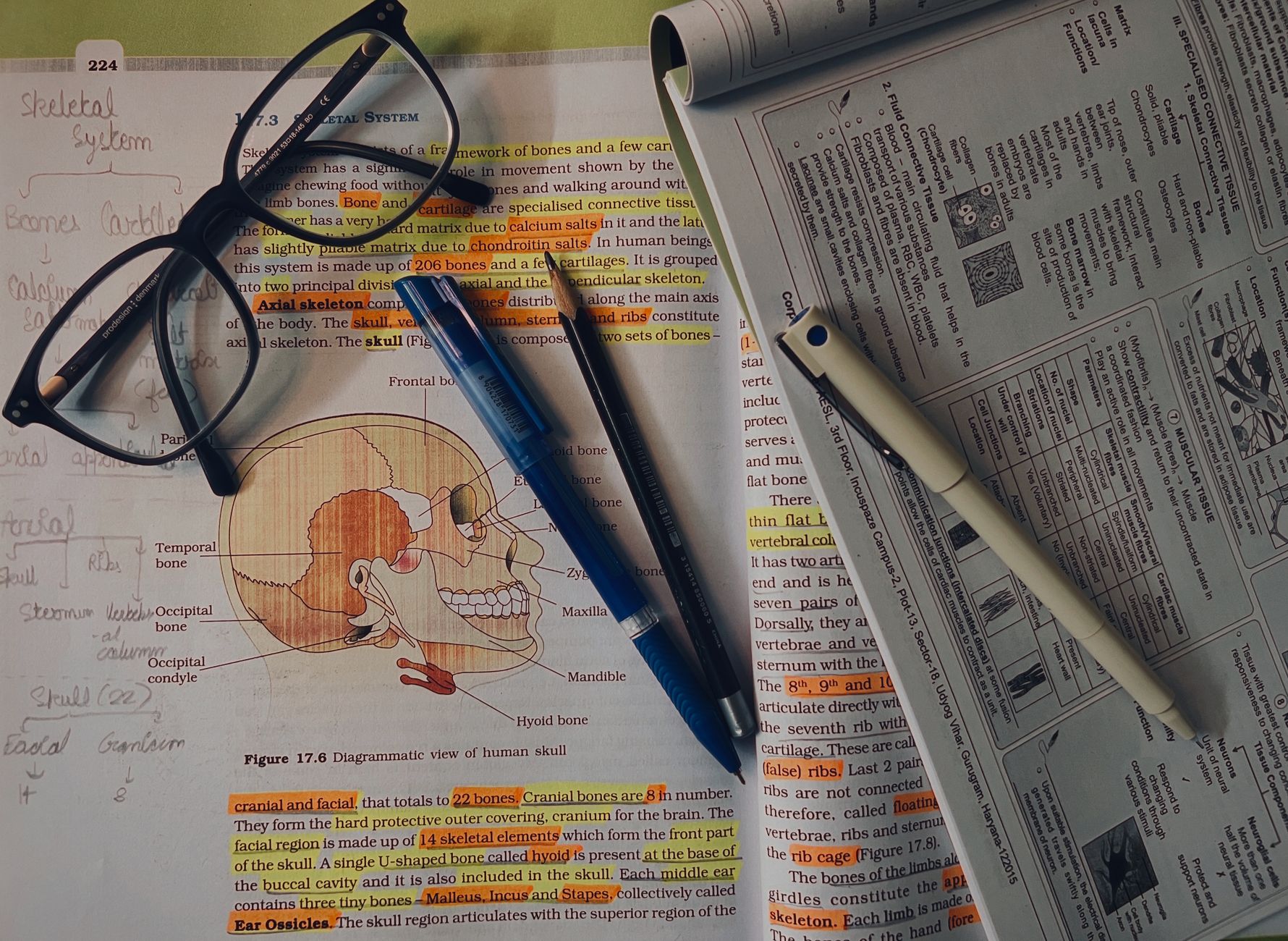
Highlighting, rereading notes, and re-watching lectures all feel like studying — but they mostly build recognition, not recall. The material looks familiar, so your brain tells you that you know it. On the exam you have to pull information from memory with no cues, which is a completely different task. Large reviews of study techniques consistently rank highlighting and rereading among the least effective strategies, and practice testing (retrieval practice) among the most effective. Nursing exams make this gap brutal because they test application, not definitions: not "what is heart failure?" but "a patient has dyspnea, bibasilar crackles, and lower-extremity edema — what is the priority intervention?"
The fix: make practice questions the core of studying, not an afterthought. As soon as you study a concept, test yourself on it with NCLEX-style questions — even if your exam is not the NCLEX, because most nursing-school exams use the same formats (clinical scenarios, select-all-that-apply, priority questions). Then run the loop: study → practice → find the gap → restudy the gap → practice again. Read the rationale for every question, including the ones you got right (sometimes you are right for the wrong reason). When you miss one, diagnose why:
Didn't know the content → study that topic.
Knew it but misapplied it → do more application questions.
Misread the question → slow down and re-read the stem.
Second-guessed yourself → build confidence with more reps.
Track your performance by topic. If you keep missing pharmacology, that is where the next study block goes. (More on getting practice tests right in are you taking practice tests wrong?)
Habit 3: Studying alone when you are stuck
Nursing content is dense, and some concepts only click after a second or third explanation. Studying alone means you get exactly one perspective — yours — and if it isn't working, you stay stuck. A classmate, tutor, or instructor can offer the one example that makes pathophysiology suddenly make sense. Study groups add something else too: accountability. When you have agreed to meet Tuesday at 6, you show up; alone, it is easy to quit when the material gets hard.
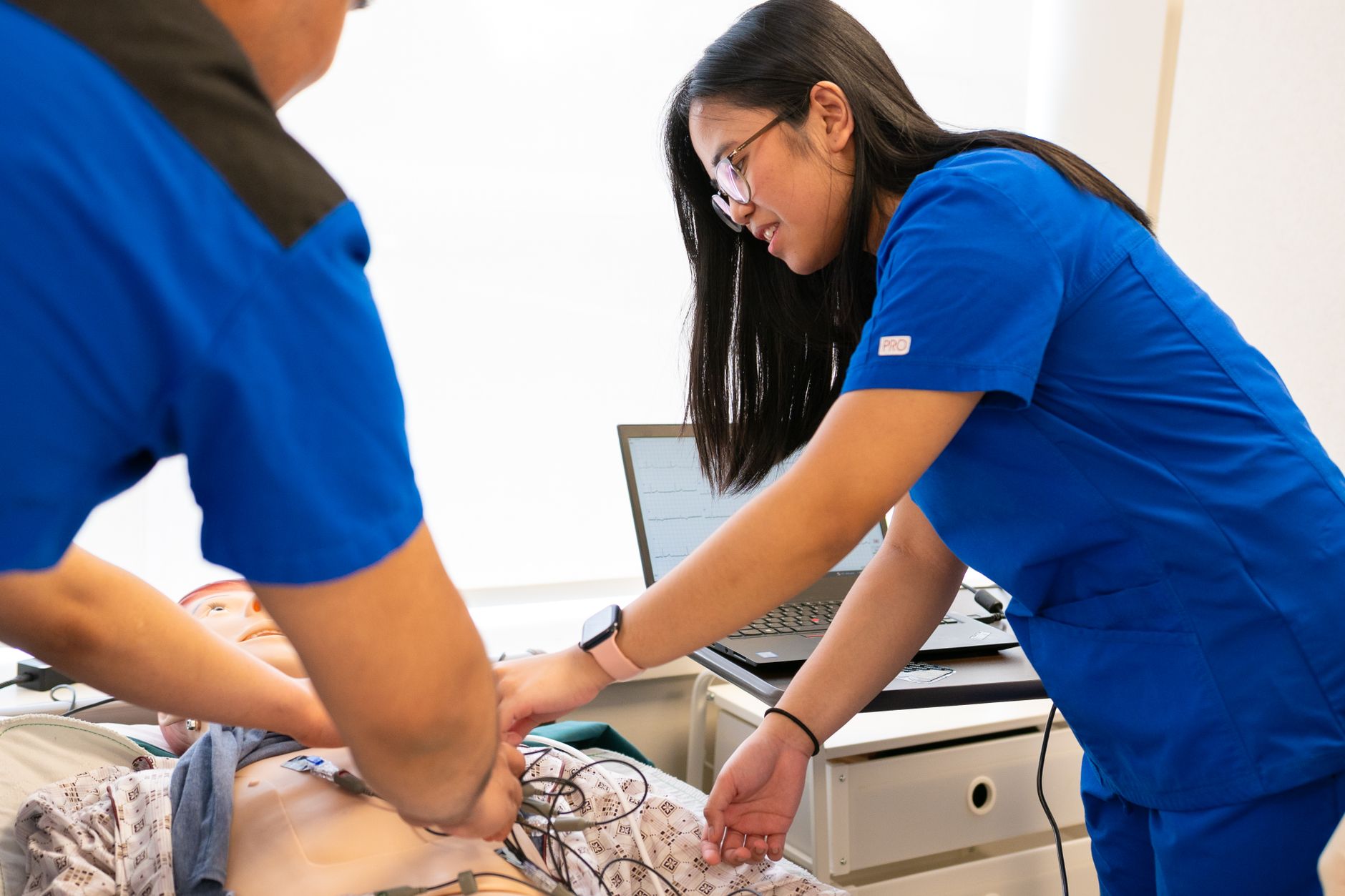
The fix: form a group of three or four (big enough for diverse views, small enough that everyone participates), meet regularly, and come prepared with specific questions — not "I don't get heart failure" but "why do ACE inhibitors cause hyperkalemia?" Teach each other; explaining a concept out loud is one of the fastest ways to find and close your own gaps. Use office hours the same way, and bring the practice questions you missed so your instructor can see your reasoning. If you are consistently struggling in one course despite all of this, get a tutor early — do not wait until you are failing.
Spot the habit, then break it
These habits are hard to break because they are automatic — you studied this way in high school and it worked. Nursing school is a different volume and a different kind of question, so old habits quietly fail you. Catch yourself with these tells: starting one or two days out and studying in marathon sittings means you are cramming; hours of rereading with almost no practice questions means you are leaning on passive review; and hours stuck on a concept you keep avoiding asking about means you are isolating. Each has a one-move fix: set a 7-day calendar reminder, end every session with 5–10 practice questions, and book one study group or office-hours slot this week.

What students who pass do differently
The students who clear exams consistently start early, practice actively instead of just reading, ask for help the moment they are confused, track the topics they miss, and protect their study blocks like scheduled shifts. None of that requires being smarter — it requires a system. Build the system once and it carries you from course exams through the NCLEX and every exam in between.
Written by · Verified educator
Testavia editorial
Nathan Cole
RN
Medical-Surgical nurse & health writer
Meet Nathan, a registered nurse with over five years of experience in Medical-Surgical care, based in New York City. Having worked with a wide range of patients through some of their most vulnerable moments, Nathan brings a grounded, real-world perspective to his writing on healthcare. His goal is simple: to bridge the gap between medical knowledge and everyday understanding, making health topics feel less intimidating and more empowering for everyone. When he's not caring for patients, Nathan channels his passion for medicine into writing that educates, comforts and inspires.
5+
Years in Med-Surg
Medical-Surgical
Specialty
New York City
Based in