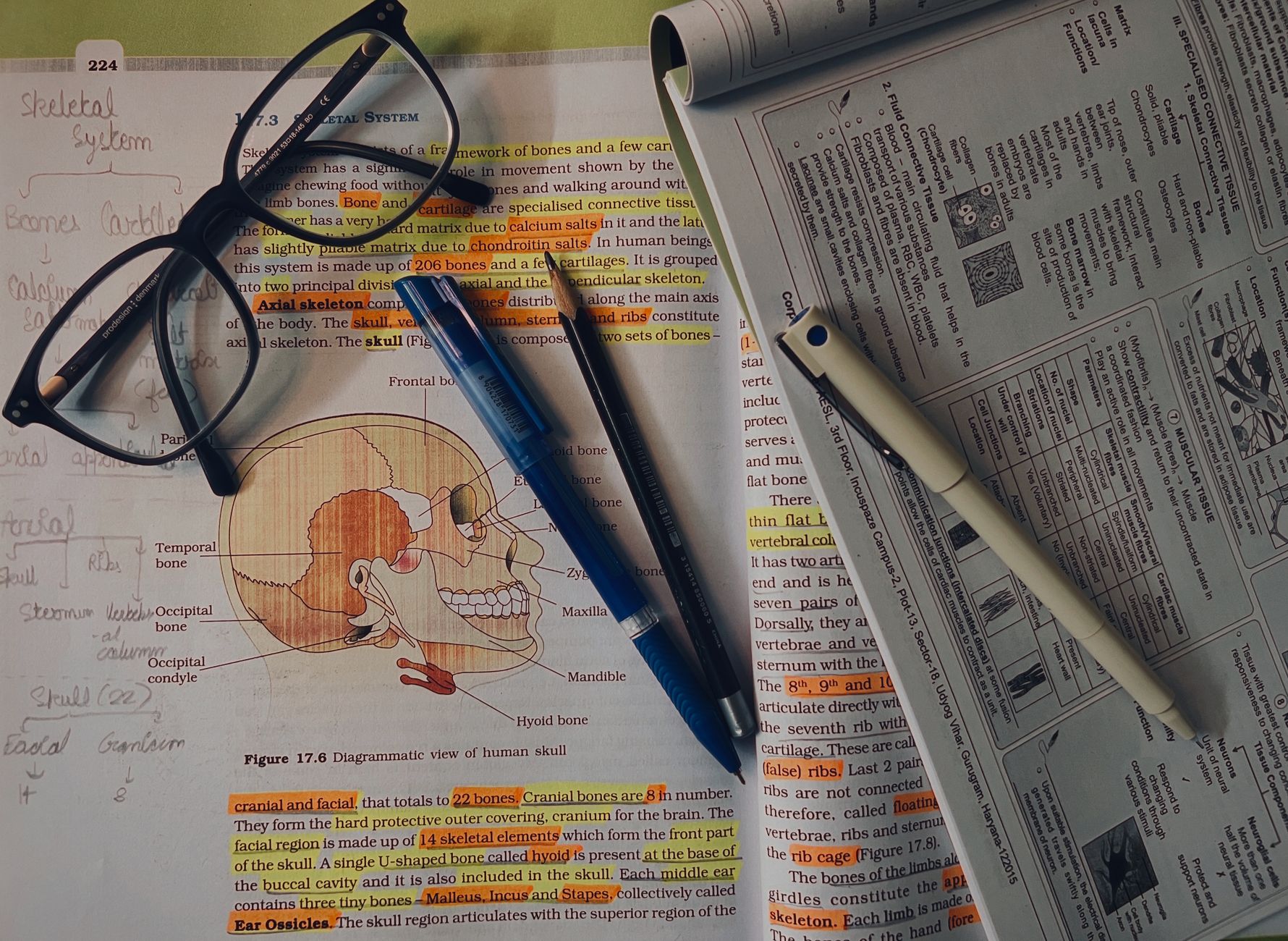
Study Smarter: 7 Evidence-Based Techniques for Nursing Students
Studying 25 hours a week and still getting Bs and Cs? More hours is not the fix. These seven techniques — drawn from decades of cognitive-psychology research — help nursing students retain more in less time by replacing passive review with active learning.
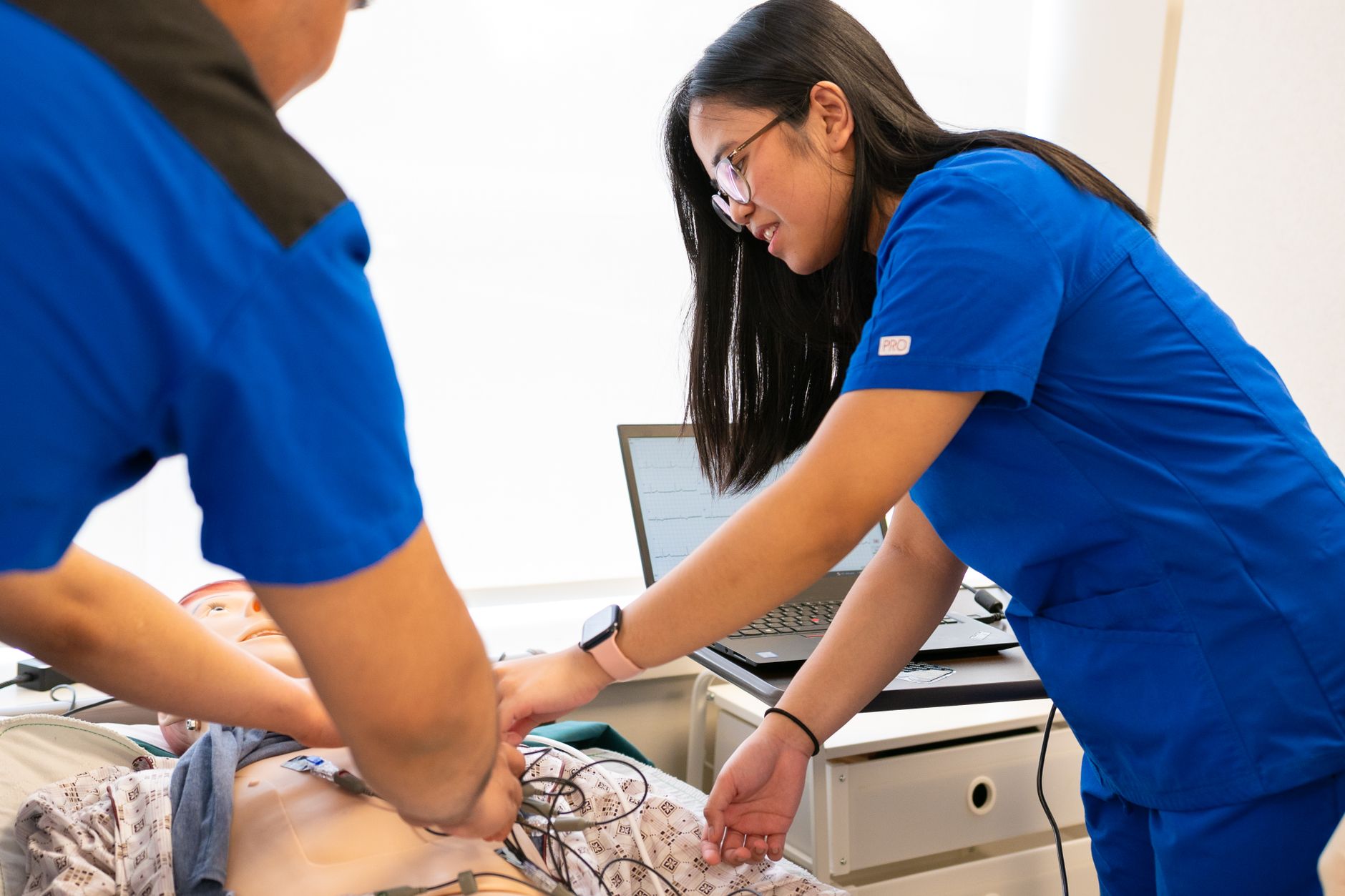
You can spend 25 hours a week rereading chapters, highlighting everything, and cramming the night before — and still land Bs and Cs. The reason is simple and a little brutal: more study hours do not equal better grades. Decades of cognitive-psychology research show that the methods most students lean on (highlighting, rereading, marathon sessions) are among the weakest, while a handful of "active" techniques produce far better retention in less time. Here are seven of them, with exactly how to use each in nursing school.
Why most studying fails
A widely cited 2013 review of learning techniques (Dunlosky and colleagues) graded ten common study methods. Only two earned a "high utility" rating — practice testing and distributed (spaced) practice. The methods most students use daily — highlighting, rereading, and summarizing — landed in the low-utility group. The reason is the difference between recognition and recall: rereading makes material feel familiar, but exams require you to retrieve it cold. Your brain learns through retrieval, not recognition, so the techniques below all share one trait — they make you actively pull information out, not passively put it in.
The 7 techniques
1. Active recall — test yourself before the test
Retrieve information from memory without looking. Roediger and Karpicke's classic testing-effect research found that students who tested themselves retained substantially more a week later than students who simply reread. Instead of rereading your ACE-inhibitor notes, close the book and write everything you can — mechanism, side effects, contraindications, patient teaching — then check and re-quiz the gaps. The 10–15 seconds of struggle before you peek is the learning.
2. Spaced repetition — review over time, not all at once
The spacing effect is one of the most replicated findings in learning science — a 2006 meta-analysis of hundreds of experiments confirmed that spaced practice beats massed practice (cramming) for long-term retention. Review new material within 24 hours, then again at roughly 3, 7, and 14 days. Your brain consolidates during the gaps; cramming gives it none. A spaced-repetition flashcard app schedules this for you automatically.
3. Interleaving — mix topics instead of blocking them
Rather than two hours each on cardiac, then respiratory, then diabetes meds, mix them: beta blocker, bronchodilator, insulin, ACE inhibitor, corticosteroid, metformin. Switching forces your brain to actively distinguish between similar drugs and disease processes instead of coasting on a single pattern — exactly the discrimination application-style exam questions demand. It is especially powerful for pharmacology and pathophysiology.
4. Elaborative interrogation — keep asking "why?" and "how?"
Do not memorize "loop diuretics cause hypokalemia." Ask why (they block sodium and chloride reabsorption in the loop of Henle, which drives potassium loss) and how it changes care (monitor potassium, watch for muscle weakness, supplement if needed). Generating the explanation builds richer, more connected memories than a bare fact ever will.
5. Dual coding — pair words with visuals
Encoding information both verbally and visually gives you two routes back to the same memory. Draw the pathway — atherosclerosis to plaque to reduced flow to angina to MI — or build a flowchart from drug to mechanism to effects to nursing considerations. Hand-drawn diagrams tend to stick better than typed notes because the act of drawing is itself active.
6. Self-explanation — teach it back
Explain a concept aloud in your own words as if teaching a classmate — left- versus right-sided heart failure, say. The moment you stumble, you have found a gap; go fill it and try again until you can run through it without hesitation. Teaching forces you to organize knowledge, which is why it exposes weak spots that rereading hides.
7. Full practice tests under exam conditions
Take timed, full-length practice exams in a quiet room with no phone. This trains content and the experience of testing — pacing and nerves — at once. Run one about two weeks out, score it, target your weak areas, then run another a week out to confirm improvement. (For how to get the most from practice tests, see are you taking practice tests wrong?)
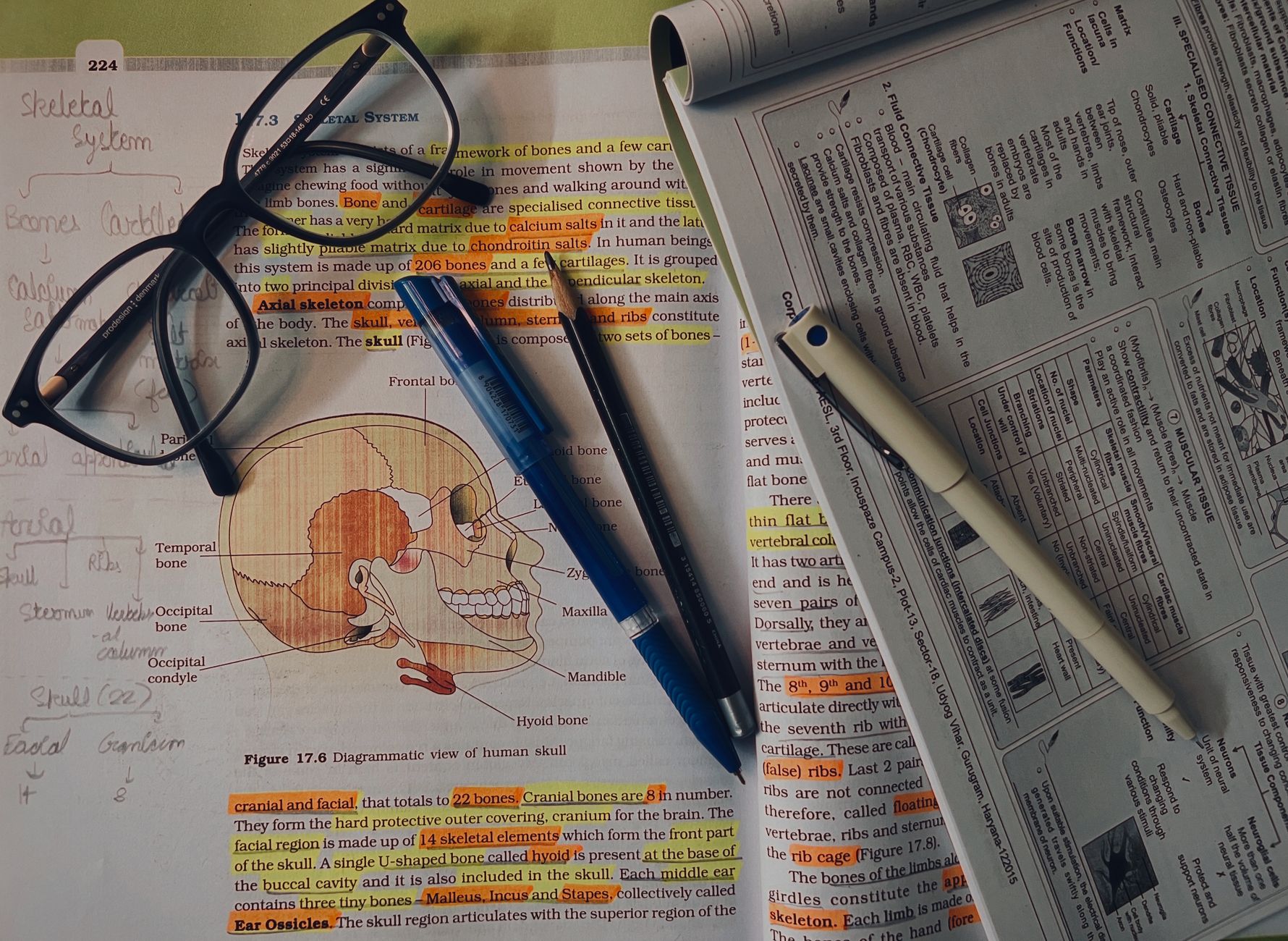

What quietly wastes your time
Studying with notifications on — every interruption resets your focus; your brain does not truly multitask.
Highlighting without testing — it makes notes pretty, not memorable.
Using one method for every subject — pharmacology wants flashcards, pathophysiology wants concept maps, skills want reps.
Studying exhausted — sleep-deprived review is far less effective; sleep beats one more hour.
Avoiding hard practice questions — the struggle is the point; comfort breeds false confidence.
Putting it together: a 2-hour pharmacology session
First 30 min: read the new cardiac-meds material once (first exposure).
Next 30 min: build a visual chart comparing drug classes, then self-explain each mechanism aloud (dual coding + self-explanation).
Next 20 min: test yourself cold on today's content (active recall).
Next 20 min: review material from three days ago (spaced repetition).
Last 20 min: mixed practice questions blending today's and earlier topics (interleaving + practice testing).
Two focused hours like that beat four hours of rereading. Protect the blocks with smart time management, and if you are still failing despite the hours, the companion piece on the three habits that sink nursing students goes deeper on fixing them.
Written by · Verified educator
Testavia editorial
Nathan Cole
RN
Medical-Surgical nurse & health writer
Meet Nathan, a registered nurse with over five years of experience in Medical-Surgical care, based in New York City. Having worked with a wide range of patients through some of their most vulnerable moments, Nathan brings a grounded, real-world perspective to his writing on healthcare. His goal is simple: to bridge the gap between medical knowledge and everyday understanding, making health topics feel less intimidating and more empowering for everyone. When he's not caring for patients, Nathan channels his passion for medicine into writing that educates, comforts and inspires.
5+
Years in Med-Surg
Medical-Surgical
Specialty
New York City
Based in