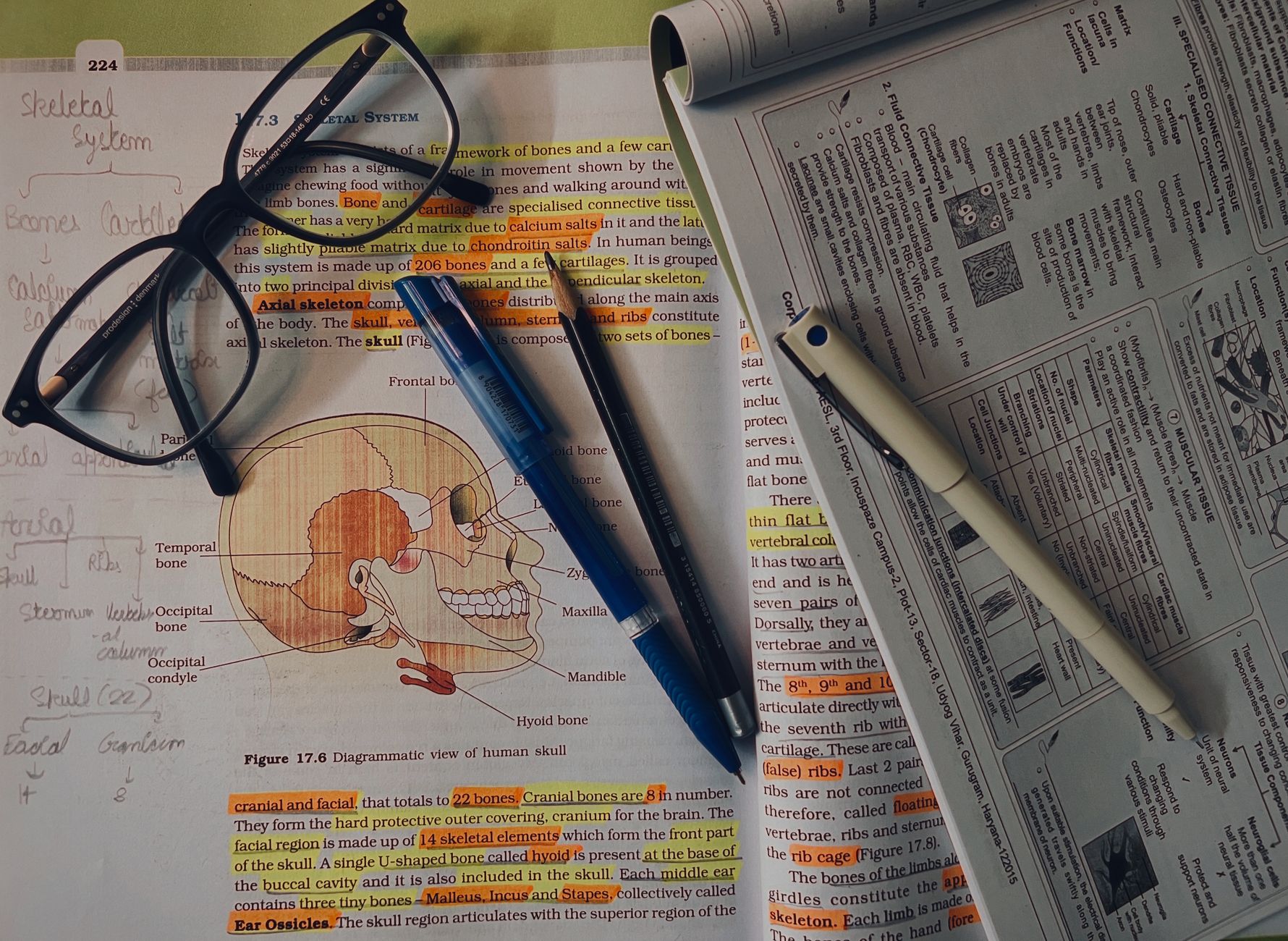
Time Management for Nursing Students (That Survives Clinicals)
Generic "make a schedule, prioritize self-care" advice falls apart the first time a clinical runs long. This is time management built for real nursing-school pressure — specific systems, study blocks, and the tradeoffs you will actually have to make.

8 AM lectures, 6 AM clinicals, care plans due Sunday at midnight, three exams next week, and pharmacology readings you have not touched — nursing school will eat you alive if you let it. Most time-management advice ("make a schedule," "prioritize self-care") is true but useless because it never tells you how. The real skill is building a system that assumes things will go wrong and still produces output. Here is what actually works under pressure.
Why generic time-management tips fail nursing students
Nursing school is not a normal academic program. The volume of content, the unpredictability of clinicals, and the mental weight of caring for real patients while still learning break ordinary study advice. You cannot "just study an hour a day" — you fall behind by week two. You cannot "just use a planner" — half your blocks get blown up by a clinical schedule change. The fix is structural: a system with built-in margin that keeps producing even when the week goes sideways.
Build the week on Sunday — and build it right
Everyone says "schedule your week." The difference is in the order. Block your fixed commitments first (classes, clinicals, work, family), then block study sessions as calendar appointments, not to-do items. "Study pharmacology" on a list never happens; "study pharmacology, Tuesday 7–9 PM" does. Color-code by category so you can see at a glance whether the week is balanced or crammed into one corner. Then plan for slippage: build in at least 30% buffer, because clinicals run long and kids get sick. Twenty minutes on Sunday evening saves the 5–10 hours you would otherwise lose mid-week to scrambling.
Use 25-minute blocks, not marathon sessions
You cannot study dense nursing content for four hours straight — retention drops sharply after about 45 minutes. The Pomodoro structure fits the way attention actually works: 25 minutes of single-task focus, then a 5–10 minute break. A real session:
25 min — practice questions on cardiac; 5 min break (walk or water, not phone).
25 min — review wrong answers and rationales; 5 min break.
25 min — flashcards on cardiac drugs; then a longer 15 min break.
That is 75 minutes of focused work in under 90 — usually more than a "3-hour session" that is really 90 minutes of rereading and 90 minutes of scrolling.

Stop reading. Do practice questions.
This is the single biggest leverage point and almost nobody names it. Rereading review books is the most time-expensive, lowest-yield way to study — it feels productive, but nursing exams and the NCLEX test application, not recall. You can read a diabetes chapter for two hours and still miss diabetes questions because you never practiced applying it. Practice questions with full rationale review do double duty: you learn the content and how it gets tested, and your time-to-mastery drops. Most students resist this because reading feels safer — you cannot "fail" a textbook — but reading as your primary strategy is exactly how you fail exams. (More on this in are you taking practice tests wrong?)
Front-load hard work and reclaim dead time
Your brain is sharpest in the morning, so put your hardest work there — care plans, dosage calculations, pathophysiology — and save brainless tasks (organizing notes, watching recorded lectures) for tired evenings. The same rule applies inside a session: tackle your weakest subject first, before your focus drains. Then reclaim hidden time without turning every minute into productivity: a drug-card review while waiting at clinicals, an A&P audio review on the commute, 15 minutes of questions at lunch. Pick two or three pockets a day and leave the rest as genuine rest.
Protect sleep and guard against burnout
Sleep is a study tool, not a luxury. Memory consolidation happens during sleep, so the material you "learn" at 2 AM never gets stored properly — an all-nighter before an exam is among the most counterproductive things you can do. Aim for six hours minimum, preferably seven, especially the week before exams. Burnout ends more nursing careers than weak study skills do, and the cruel twist is that stressed students tend to pile on more academic time, which makes it worse. Protect one full school-free evening a week, move your body 30 minutes a day, eat real meals when you can, and stay connected to people outside nursing. This is tactical, not soft: burnout costs you semesters; a walk costs you twenty minutes.
Find your people (but choose carefully)
A study group either saves your sanity or wastes your time — little in between. A productive one follows three rules: everyone comes prepared (the group is not your first exposure to the material), every session has a specific goal ("review fluid and electrolyte balance"), and you teach each other, because explaining a concept aloud is one of the highest-retention methods there is. If your group has become two people working and three scrolling, leave politely and find different people.
When your week gets demolished (because it will)
Cut to essentials. What absolutely must happen — exam prep, a graded assignment, a clinical write-up? Everything else moves.
Communicate early. Email professors for an extension the moment you know, not the day it is due — most will work with you if you ask early.
Don't borrow from sleep. Making it up by sleeping less just compounds the problem into next week.
Reset on Sunday. Build next week from scratch instead of dragging the broken plan forward.
Resilience here is not never falling behind — it is getting back on track fast when you do. If you are weighing the road ahead, the honest takes on whether nursing school is as hard as people say and the study habits that sink students pair well with this. Build out your toolkit with our nursing-school resources roundup too.
Written by · Verified educator
Testavia editorial
Nathan Cole
RN
Medical-Surgical nurse & health writer
Meet Nathan, a registered nurse with over five years of experience in Medical-Surgical care, based in New York City. Having worked with a wide range of patients through some of their most vulnerable moments, Nathan brings a grounded, real-world perspective to his writing on healthcare. His goal is simple: to bridge the gap between medical knowledge and everyday understanding, making health topics feel less intimidating and more empowering for everyone. When he's not caring for patients, Nathan channels his passion for medicine into writing that educates, comforts and inspires.
5+
Years in Med-Surg
Medical-Surgical
Specialty
New York City
Based in