Are You Taking Practice Tests Wrong? 7 Mistakes That Waste Your Time
Score 72% on a practice test, then 68% on the real TEAS? You are probably using practice tests as quizzes instead of learning tools. Here are the seven mistakes that flatten your score — and the protocol that turns every practice test into real study.
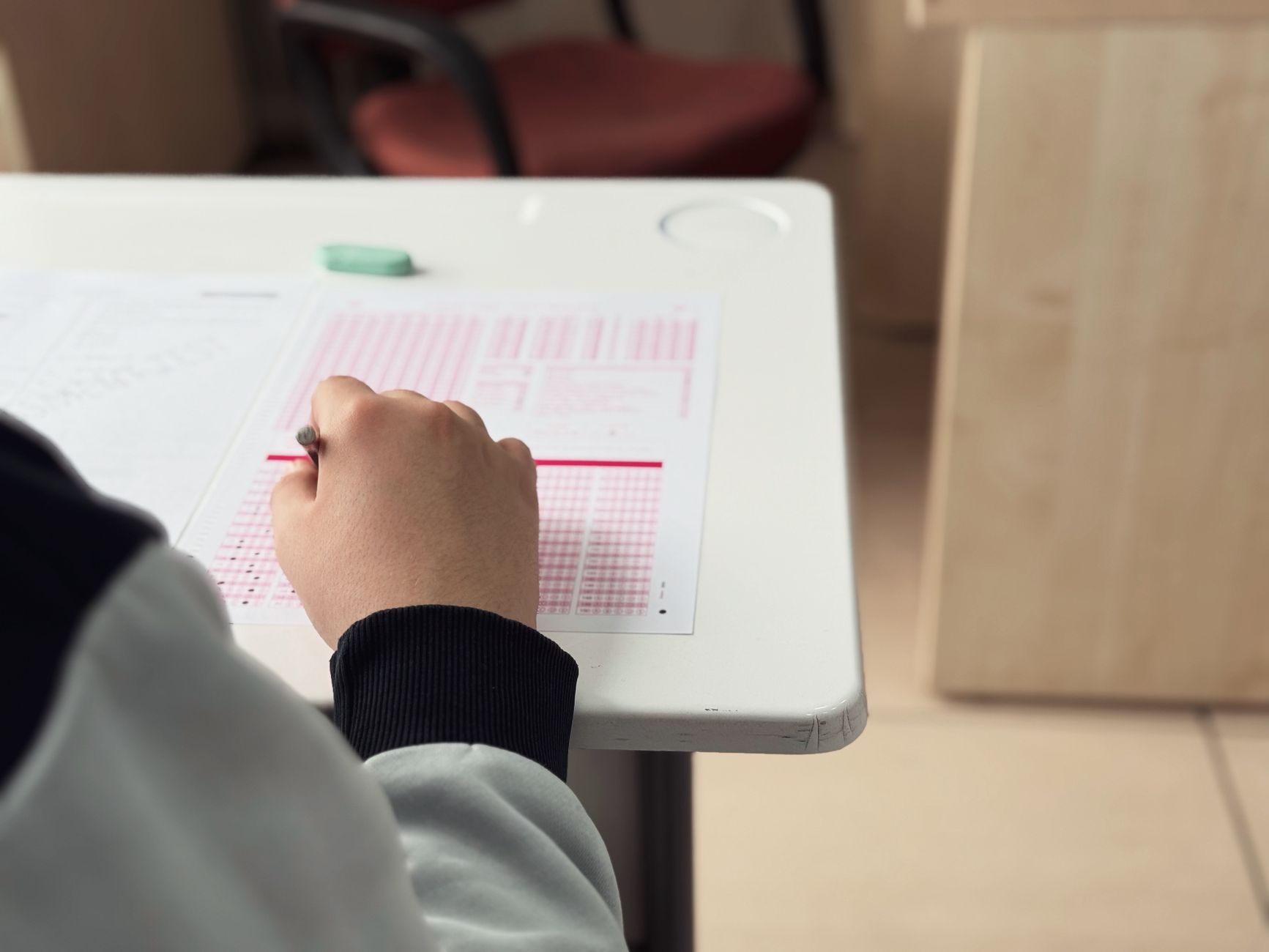
You take a practice test, score 72%, feel fine, and move on. Three weeks later the real TEAS comes back at 68% — same topics, same question types. What happened? Most likely you used the practice test as a quiz to check knowledge when it is actually one of the most powerful learning tools you have. Retrieval practice — pulling answers from memory under pressure — builds durable learning in a way rereading never will, but only if you avoid the seven mistakes below.
The 7 practice-test mistakes
1. Peeking at notes mid-test
Taking a practice test with your notes open turns recall into recognition. Seeing the answer and thinking "oh yeah" feels easy, but it skips the productive struggle that actually strengthens memory. The real exam gives you no hints, so practice the way you will perform: close everything, set a timer, and attempt every question — guessing if you must — before you check anything.
2. Waiting until you "feel ready" to test
Practice testing IS studying, not just assessment — so saving it for the end wastes its biggest benefit. Early tests reveal gaps while you still have time to fix them; late tests just confirm what you do not know with no runway left. Take a diagnostic before you study anything, mini-quiz after each session, and run full-length tests throughout your prep.
3. Reviewing wrong answers for five minutes
The gold is in the misses. Glancing at your score and scrolling past the wrong answers guarantees you miss the same concept again on the real test. Flip the ratio: spend more time reviewing than testing. For every wrong answer, work the protocol below.
4. Fixating on the overall score
Stuck at 72% across five tests? The score is a lagging indicator — it tells you what already happened. Your mistake patterns are the leading indicator that tells you what to fix. Track performance by section and topic, not just the headline number, so you can see that (say) math is climbing while science is stuck and needs a different approach.
5. Practicing in "comfort mode"
TV on, snack breaks, a quick phone check, pausing whenever a question is hard — then telling yourself you will focus on the real test. You will not rise to the occasion; you default to your training. Simulate the real thing: a quiet room, no phone or notes, strict section timing, and no pausing mid-section (the TEAS does not let you).
6. Retaking the same test until you ace it
Running the same 50-question test five times until you hit 92% trains answer recognition, not concept mastery — when the real exam reworks the concept with different wording, you blank. Do not repeat the exact same test more than twice, space any repeat at least two weeks out, and rotate through different question banks so you are mastering concepts, not memorizing items.
7. Not watching your time per question
On the TEAS you have 170 questions in 209 minutes — roughly 75 seconds each. Spend three minutes chasing one hard question and you sacrifice several easy ones at the end. Missing three hard questions costs three points; missing seven easy ones because you ran out of time costs seven. Cap yourself at about 90 seconds, guess and flag anything past that, and circle back if time allows — there is no penalty for guessing, so never leave a blank.


How to actually use a practice test: the 5-step protocol
Simulate real conditions — timer on, materials closed, distractions gone, no pausing.
Take the whole test — flag hard questions, guess when stuck, track time per section, push through fatigue (that builds stamina).
Score it immediately — overall, by section, and note your timing (finished early? rushed?).
Analyze every miss — for each wrong answer ask: what was it really asking, why is the right answer right, why did I pick mine, and what do I review? Include questions you guessed right.
Target and retry — study the weak areas you found, then do similar (not identical) questions, and repeat the cycle every 7–10 days.
How often should you take full practice tests?
Phase | Full-length tests | Focus |
|---|---|---|
6–8 weeks out | 1 diagnostic | Learn; short section quizzes |
4–5 weeks out | 1 per week | Balance testing with content review |
2–3 weeks out | 2 per week | Shift hard toward weak areas |
Final week | 1 (3–5 days before) | Light review; no new tests in last 48h |
Use the official ATI practice tests for the most accurate format, and supplement with a question bank between them. The same diagnostic-and-review discipline carries straight into nursing school — it is the test-taking skill that makes nursing exams and the science-heavy sections like TEAS science manageable. Pair it with the broader study-smarter techniques and you compound the gains.
Written by · Verified educator
Testavia editorial
Nathan Cole
RN
Medical-Surgical nurse & health writer
Meet Nathan, a registered nurse with over five years of experience in Medical-Surgical care, based in New York City. Having worked with a wide range of patients through some of their most vulnerable moments, Nathan brings a grounded, real-world perspective to his writing on healthcare. His goal is simple: to bridge the gap between medical knowledge and everyday understanding, making health topics feel less intimidating and more empowering for everyone. When he's not caring for patients, Nathan channels his passion for medicine into writing that educates, comforts and inspires.
5+
Years in Med-Surg
Medical-Surgical
Specialty
New York City
Based in