Nursing School Resources: The Apps, Books, and Tools Worth Your Time
You do not need every app, book, and website marketed to nursing students — you need the right 3 to 5 matched to your gaps and learning style. Here is a category-by-category guide to what genuinely helps, what to skip, and how to choose without going broke.
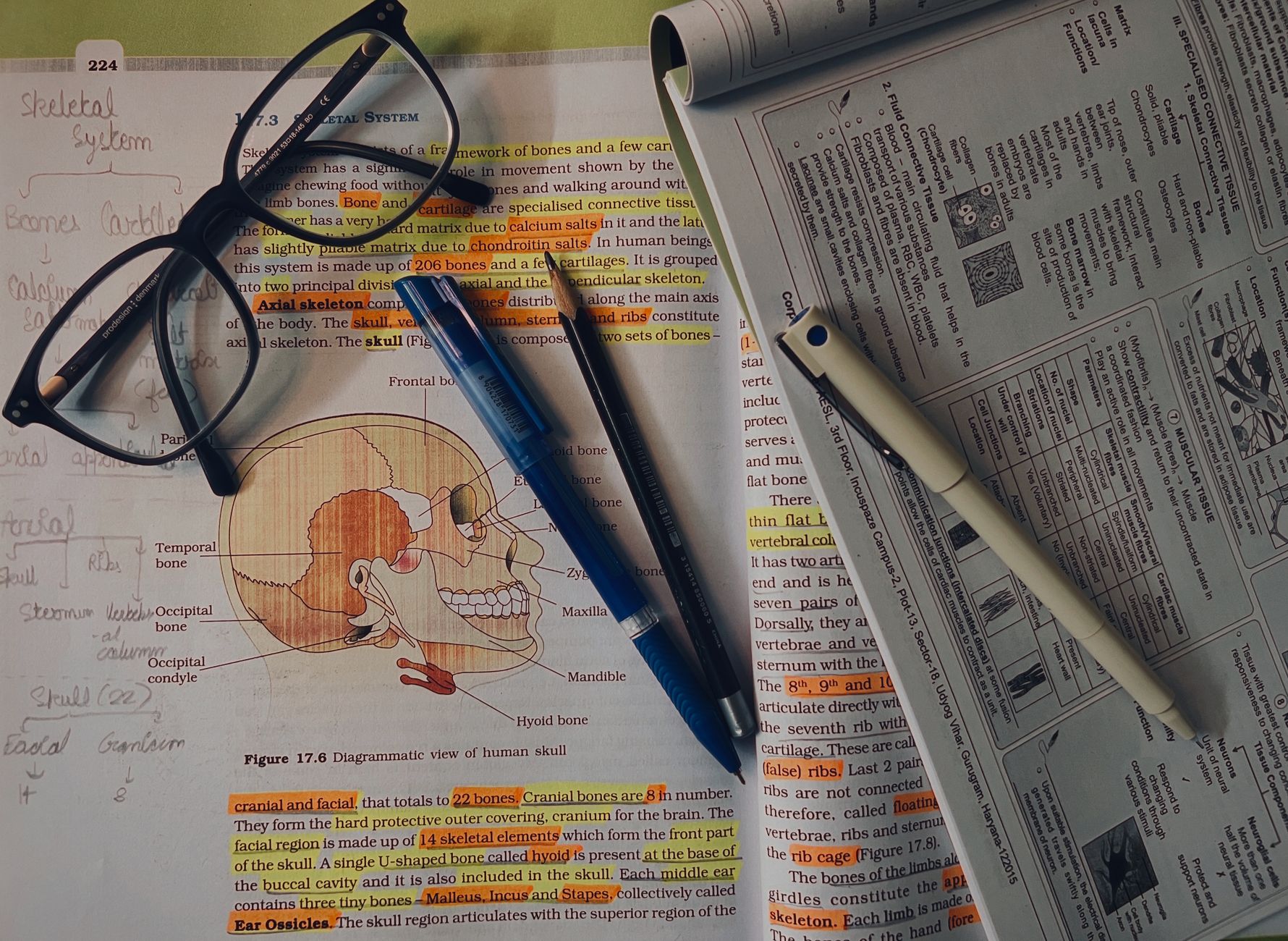
Drowning in lecture notes with a pharmacology exam in three days is the nursing-school baseline. Here is the truth about resources: you do not need every app, book, and website that exists — you need the right combination matched to your learning style and your actual knowledge gaps. Most successful students rely on three to five core tools used consistently, not dozens used sporadically. This guide walks through each category, who it is for, and what is worth your money versus what to skip.
Practice-question banks: your highest-leverage tool
If you buy one thing, make it a quality practice-question bank. Nursing exams and the NCLEX test application, not recall, so questions with full rationale review do double duty — you learn the content and how it gets tested. The market runs from premium banks to budget options with unlimited questions; many offer free trials, so try before you commit and pick one you will actually use daily. For visual learners, mnemonic-and-illustration platforms help concepts stick; for those who learn by listening, video-lesson platforms break down pathophysiology and pharmacology well. Whatever you choose, the rule is the same: do questions every day and review every rationale, right or wrong.
Drug-reference apps
A drug reference on your phone is non-negotiable for clinicals. Davis's Drug Guide is the nursing-focused standard, written with nursing considerations front and center, and Epocrates is a widely used reference with a capable free tier covering dosing, interactions, and contraindications. Either one lets you verify a medication at the bedside before you give it — exactly the habit clinical instructors want to see.

Core textbooks worth buying
You will not use half the books on your syllabus. Start with the ones professors actually test from, and check your library, rental sites, and used listings before paying full price. The reliable standards:
Potter & Perry, Fundamentals of Nursing — the standard fundamentals text (assessment, patient teaching, foundations). It is long, so read it targeted, not cover to cover.
Jarvis, Physical Examination & Health Assessment — the go-to for assessment skills, with technique videos; invaluable in clinicals.
Lehne's Pharmacology for Nursing Care — comprehensive, evidence-based, and required by many BSN programs. Pharmacology fails more students than any other subject, so the right resource here matters.
Lewis's Medical-Surgical Nursing — comprehensive med-surg organized by body system. Big enough to overwhelm, so pair it with strong time management.
Saunders Comprehensive Review for the NCLEX-RN — the most popular NCLEX review book, with thousands of practice questions and computerized tests that mimic the exam format.
A comprehensive text only helps if you study it actively — see how to stop failing nursing exams for why active learning beats rereading 1,400 pages.

Free resources that actually help
RegisteredNurseRN (YouTube) — high-quality free videos on pathophysiology, pharmacology, and NCLEX topics; excellent paired with practice questions.
Open Textbook Library — free, openly licensed nursing texts; great for a second explanation when your assigned book does not click.
GlobalRPh / medical calculators — free IV drip-rate, dosing, and clinical-score calculators that cut calculation errors.
AllNurses (with a caveat) — a large nursing community for real-world perspective, but forums mix evidence-based advice with personal opinion, so verify before you rely on it.
Lippincott Procedures — step-by-step procedure guides; many programs provide free access through the library.
Clinical and organization tools
A lab-values reference app (usually a couple of dollars) gives you instant normal ranges and clinical significance while reviewing patient charts. For organization, NurseGrid is built for nursing students and handles shift scheduling and clinical-hour tracking across multiple sites; Notion is more flexible for assignments and study schedules but takes longer to set up. Pick one — do not run both. And if stress is the real bottleneck, a few minutes of guided breathing helps, but no meditation app fixes a planning problem; if that is the issue, start with better time management.
How to choose — and what to skip
The sheer number of options creates paralysis, where you research tools instead of studying. Use a quick selection process: identify your biggest struggle first (pharmacology? clinical skills? organization?), match the resource to how you learn, set a realistic budget, ask upperclassmen what actually helped them, and use free trials before paying. Then:
Invest in one practice-question bank, one drug reference, and the core textbooks your program actually tests from.
Skip or go free for multiple apps covering the same content, every supplemental textbook marketed at you, and anything you will not open consistently.
Master a few high-quality resources rather than hoarding a shelf you never touch. Wondering how all this fits the bigger picture? See how long nursing school takes and the study-smarter techniques that make any resource work harder.
Written by · Verified educator
Testavia editorial
Nathan Cole
RN
Medical-Surgical nurse & health writer
Meet Nathan, a registered nurse with over five years of experience in Medical-Surgical care, based in New York City. Having worked with a wide range of patients through some of their most vulnerable moments, Nathan brings a grounded, real-world perspective to his writing on healthcare. His goal is simple: to bridge the gap between medical knowledge and everyday understanding, making health topics feel less intimidating and more empowering for everyone. When he's not caring for patients, Nathan channels his passion for medicine into writing that educates, comforts and inspires.
5+
Years in Med-Surg
Medical-Surgical
Specialty
New York City
Based in