The 10 Most-Missed TEAS Topics (and How to Fix Each One)
Most students who retake the TEAS miss the same handful of topics the second time around. Here are the ten that instructors see cost the most points — anatomy pathways, dosage setup, metric conversions, inference, and more — with a concrete fix for each.
The students who retake the TEAS usually miss the same handful of topics the second time around. ATI does not publish which questions are missed most often, so treat any "official miss rate" you see online with suspicion. But teach enough pre-nursing students and the pattern is hard to ignore: anatomy pathways nobody can trace under pressure, dosage proportions set up backward, metric conversions that move the decimal the wrong way, and grammar rules that contradict how people actually talk. None of these are conceptually brutal. They cost points because students underestimate them, confuse them with look-alike topics, or run out of time. Below are the ten topics instructors flag most, with the question type to expect and a concrete fix for each — so you drill what moves your score instead of reviewing what you already know.
How we picked these ten (and what "most-missed" really means)
To be clear about the claim: ATI does not release topic-level miss rates, so nobody can hand you an official ranked list. This one comes from instructor observation and the trouble spots that show up again and again — in official practice assessments, in how students perform on Testavia diagnostics, and in the questions pre-nursing students ask most. The topics here are not necessarily the hardest in theory. They are the ones students consistently lose points on, usually for one of three reasons: they require rote memorization you cannot reason your way around, they involve multi-step setup where one slip sinks the answer, or they test a formal rule that sounds wrong out loud.
For context on where these sit, the four TEAS 7 sections are Reading (45 questions, 55 minutes), Mathematics (38 questions, 57 minutes), Science (50 questions, 60 minutes), and English and Language Usage (37 questions, 37 minutes) — 170 questions across 209 minutes of testing time, per ATI's official TEAS exam details. Science is the biggest section, so it is no surprise it owns the most entries on this list.

The 10 most-missed TEAS topics
1. Anatomy and physiology pathways (Science)
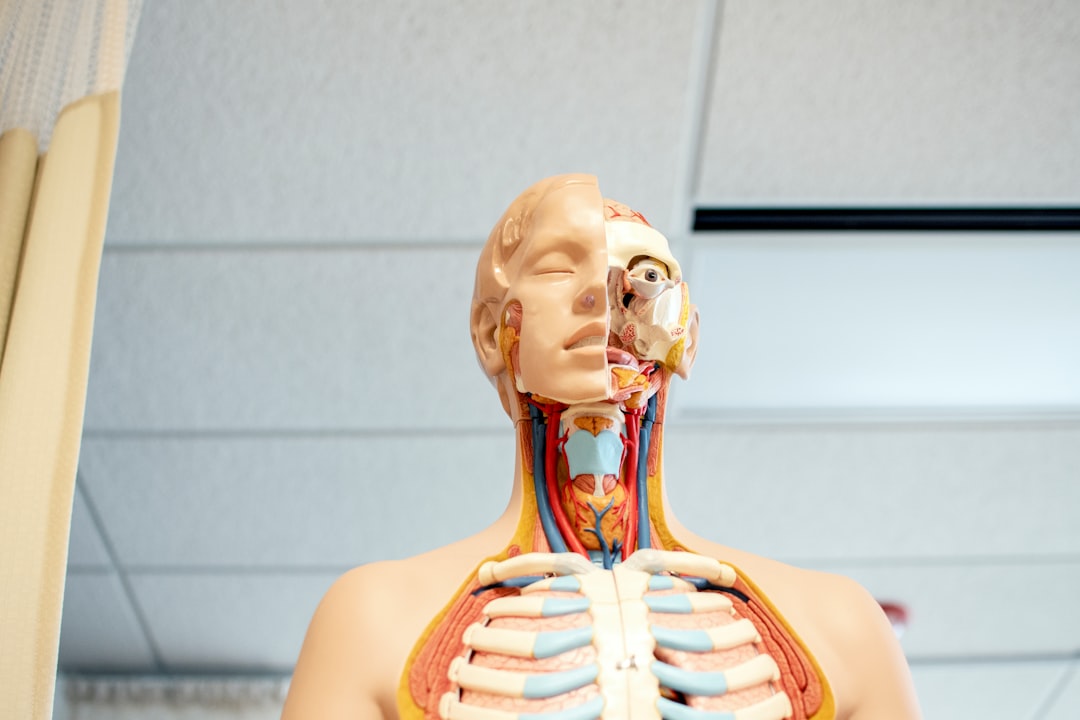
Tracing blood flow through the heart and lungs is sequence memorization, not part identification. Students can point to the right atrium but freeze when asked where blood goes next. A typical question reads, "Trace the pathway of blood from the right ventricle to the left atrium." One wrong step and the whole answer collapses. The fix: draw the loop from memory until it is automatic — right atrium to right ventricle to pulmonary artery to lungs to pulmonary veins to left atrium to left ventricle to aorta to body. Do the same for digestion (mouth, esophagus, stomach, small intestine, large intestine, rectum) and a basic reflex arc (stimulus, sensory neuron, spinal cord, motor neuron, muscle). If you cannot sketch it without looking, you do not know it yet.
2. Inference questions (Reading)
Inference asks what a passage implies but never states outright — for example, "Based on the passage, what can be inferred about the author's view on healthcare reform?" Students miss these two ways: they pick the answer that is literally written (that is recall, not inference) or they import an opinion the text does not support. The fix: ask "what does the author want me to conclude from how this is written?" then eliminate any option that contradicts the passage, requires outside knowledge, or merely restates what is explicitly said. The right answer is always supported by the text, even when it is never spelled out.
3. Dosage calculations and ratios (Math)
Students know the proportion formula but flip the numerator and denominator or skip a unit conversion. Take "A medication comes in 250 mg tablets; the order is 750 mg — how many tablets?" The trap is setting up 250/x = 750/1 instead of 250/1 = 750/x. The fix: set every proportion up the same way — what you have over one unit equals what you need over x. So 250 mg / 1 tablet = 750 mg / x tablets, cross-multiply to 250x = 750, solve to x = 3 tablets. Practice ten problems a day with that identical layout until the format is muscle memory and you are not improvising it under the clock.
4. Subject-verb agreement with indefinite pronouns (English)
Words like "everyone," "each," "neither," and "either" sound plural but are grammatically singular, so "Everyone (is/are) required to submit a form" takes "is." It feels wrong because casual speech ignores the rule constantly. The fix: stop trusting your ear and memorize the singular set — each, every, everyone, everybody, anyone, anybody, someone, somebody, neither, either, nobody, no one. They all take singular verbs, every time: "Each of the students has a textbook," "Neither of the options is acceptable." On the TEAS, the rule wins over how it sounds out loud.
5. Mitosis vs. meiosis (Science)
Both split cells, the names rhyme, and the details blur — which makes "Which division produces gametes?" (meiosis) and "How many daughter cells result from mitosis?" (two) reliable point-losers. The fix: build and memorize a side-by-side comparison so the two never run together:
Feature | Mitosis | Meiosis |
|---|---|---|
Purpose | Growth and repair | Produces gametes (sex cells) |
Daughter cells | 2 | 4 |
Chromosome number | Same as parent (diploid) | Half of parent (haploid) |
Cells are | Genetically identical | Genetically varied |
6. Metric conversions (Math)
Everyone knows 1 kg = 1,000 g; the misses come from moving the decimal the wrong direction. "Convert 2.5 kg to grams" should give 2,500 g (multiply by 1,000), but a rushed student divides and writes 0.0025 g. The fix: use dimensional analysis so the units cancel and tell you the direction — 2.5 kg multiplied by (1,000 g / 1 kg) leaves grams, no guessing. Memorize the core set (1 kg = 1,000 g, 1 g = 1,000 mg, 1 L = 1,000 mL, 1 m = 100 cm) and drill ten conversions daily. These are free points that carry straight into nursing-school dosage math.
7. DNA structure and base pairing (Science)
Four bases, two pairing rules, and students still scramble them on "Adenine pairs with which base?" (thymine) or "What are the building blocks of DNA?" (nucleotides). The fix: lock in A pairs with T and G pairs with C, and know the structure — a double helix of nucleotides, each made of a sugar (deoxyribose), a phosphate group, and a nitrogenous base. Flashcard it both directions until the pairings are instant. This is one of the most predictable topics on the section, so there is no excuse for missing it.
8. Main idea vs. supporting detail (Reading)
Asked for the main idea, students pick a vivid supporting detail (too narrow) or a vague catch-all (too broad). Details are specific and memorable, so they pull your eye away from the central point. The fix: ask "if I summarized this whole passage in one sentence, what would it be?" — that is the main idea; everything else is the evidence behind it. Practice by reading a paragraph and summarizing it in ten words or fewer, then checking whether your summary covers the entire paragraph or only one corner of it.
9. Sentence fragments (English)
A fragment starts with a capital and ends with a period, so it looks like a sentence — and your brain fills the gap when you skim. "Because the patient was stable." is a dependent clause with no payoff; the complete version is "Because the patient was stable, the doctor discharged him." The fix: check for a subject and a verb and a complete thought. Watch the subordinating conjunctions that signal a dependent clause — because, although, when, if, while, since — because a clause that opens with one needs an independent clause to finish it. Slow down enough to confirm each sentence can stand on its own.
10. The acid-base pH scale (Science)
The 0 to 14 scale is simple, yet students still mix up which end is which on "A substance has a pH of 3 — acidic, basic, or neutral?" (acidic). The fix: memorize three bands — pH 0 to 6 is acidic (stomach acid is roughly 2), pH 7 is neutral (water), pH 8 to 14 is basic (bleach is roughly 13). Lower means more acidic, higher means more basic. Flashcard a few values ("Is pH 10 acidic or basic?" — basic, above 7) and these become guaranteed points instead of coin flips.
Why these topics trip up so many students
They demand memorization, not reasoning. You cannot logic your way to a blood-flow pathway or a base-pairing rule — you either know it cold or you do not.
They are multi-step. Dosage and metric problems need correct setup and correct arithmetic; one slip anywhere costs the whole question.
They test formal rules that sound wrong out loud. Indefinite-pronoun agreement is the classic case — the correct answer feels off because casual speech breaks the rule.
They have look-alike twins. Mitosis vs. meiosis, main idea vs. detail, acid vs. base — under pressure the pairs blur together.
Time pressure punishes skimming. Inference and fragment questions reward careful reading; rushing them is how strong readers still lose points.

How to drill the most-missed topics
Diagnose first. Take a full-length practice test and mark which of these ten you missed. Those are your priorities — not the topics you already handle.
One topic per session. Do not chase all ten at once. Pick one a day, run 10 to 15 questions on it, review every miss, repeat.
Use active recall. Draw the pathways from memory, solve dosage problems without peeking at the formula, recite the base pairs aloud. Rereading notes feels productive and is not.
Practice on the clock. Several of these are missed purely because students run out of time. Train to answer in 60 to 90 seconds so speed is built in.
Fix the root cause of each miss. Did you forget the rule, set the problem up wrong, or misread the question? Diagnose why, not just what — that is what stops the same mistake recurring.
Want the section-by-section detail behind these topics? Dig into the TEAS science breakdown, the TEAS math guide, and the anatomy and physiology guide. New to the whole exam? Start with our TEAS test prep overview.
Written by · Verified educator
Testavia editorial
Nathan Cole
RN
Medical-Surgical nurse & health writer
Meet Nathan, a registered nurse with over five years of experience in Medical-Surgical care, based in New York City. Having worked with a wide range of patients through some of their most vulnerable moments, Nathan brings a grounded, real-world perspective to his writing on healthcare. His goal is simple: to bridge the gap between medical knowledge and everyday understanding, making health topics feel less intimidating and more empowering for everyone. When he's not caring for patients, Nathan channels his passion for medicine into writing that educates, comforts and inspires.
5+
Years in Med-Surg
Medical-Surgical
Specialty
New York City
Based in