Is the ATI TEAS Exam Difficult? An Honest Breakdown
The ATI TEAS 7 is challenging but beatable: 170 questions in 209 minutes across Reading, Math, Science, and English. Here is what actually makes it hard, a section-by-section difficulty breakdown with official ATI numbers, and how to prepare without burning out.

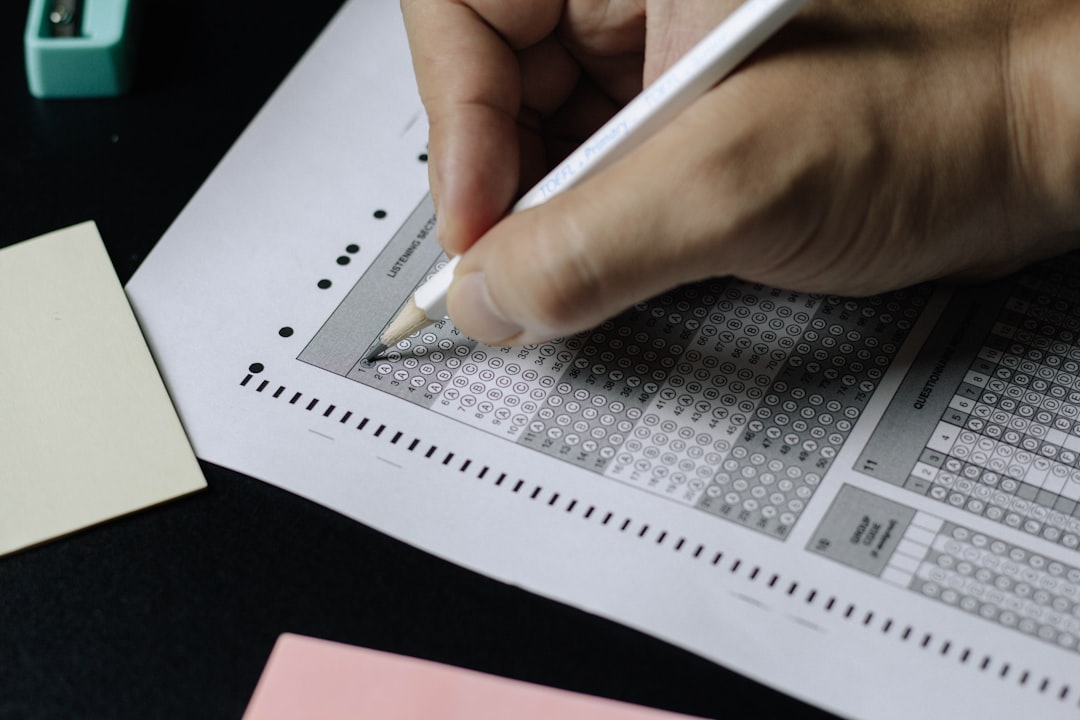
Yes, the ATI TEAS is difficult — but it is difficult in a predictable, beatable way. The TEAS 7 gives you 170 questions in 209 minutes across four sections, and what trips people up is rarely raw intelligence. It is the breadth (reading, math, anatomy, biology, chemistry, grammar — all in one sitting), the clock, and the fact that many test-takers are returning to school after years away. None of that is a wall. Students who pass are not smarter than you; they prepared to the blueprint instead of studying everything at once. This guide breaks down exactly what makes the TEAS hard, how each section ranks for difficulty, and how to prepare without burning out.
What is the ATI TEAS, and why does it feel hard?
The ATI TEAS (Test of Essential Academic Skills) measures your academic readiness for nursing and allied-health programs. Schools use your score to predict whether you can handle the academic load, and at competitive programs that score can make or break your application. The current version, TEAS 7, launched in 2022 and replaced TEAS 6, adding question types — multiple-select, supply-answer, ordered-response — that test critical thinking over rote recall.
Here is the honest reason it feels hard: the TEAS is testing years of accumulated knowledge from high school and early college, often under time pressure, sometimes after you have been out of a classroom for a decade. The content itself is foundational. The challenge is the volume, the pace, and the pressure stacked on top of each other.
What actually makes the TEAS difficult
Breadth of content. You are tested on reading comprehension, math, anatomy and physiology, biology, chemistry, scientific reasoning, and grammar — all in one sitting. Students often do not know where to focus first.
Time pressure. Each section is separately timed, and you cannot return to a section once it ends. If you burn five minutes on one hard question, you skip three easier ones at the end.
Returning to academics. Many test-takers have not touched algebra or labeled a body system in years. Relearning the foundations while juggling work and life is genuinely harder.
High stakes. You need a competitive score to get into nursing school, and that pressure breeds anxiety — which makes manageable questions feel impossible. Fear of failure becomes its own obstacle.

TEAS 7 format, timing, and scoring
The TEAS 7 has 170 total questions and a 209-minute time limit across four sections. Of the 170, 150 are scored and 20 are unscored pretest items that ATI uses to trial future questions. You will not know which are which, so treat every question as if it counts. According to ATI's official TEAS exam details, the sections break down like this:
Section | Questions | Time | Difficulty for most students |
|---|---|---|---|
Reading | 45 | 55 min | Moderate — pace and inference |
Mathematics | 38 | 57 min | Moderate — rusty fundamentals |
Science | 50 | 60 min | Hardest — broad and A&P-heavy |
English & Language Usage | 37 | 37 min | Easiest — but careless misses cost |
Your score is reported as a composite percentage and individual section percentages. Most programs look for composite scores in the 60–75% range, and competitive BSN programs often want 75% or higher — but there is no universal cutoff, so check your school. The lesson in the numbers above: pacing matters more than perfection. You do not need to ace every question; you need to answer enough correctly within the time limit.
Section-by-section: which parts are actually hard
Reading — 45 questions, 55 minutes
Reading tests whether you can find main ideas, interpret charts, identify supporting details, and make inferences from short passages. With 45 questions in 55 minutes, you have just over a minute each — including reading time. Slow readers and chronic second-guessers run out of clock, and inference questions feel subjective under stress. What helps: read actively, mark key points, and answer what the passage says, not what you think it should say.
Mathematics — 38 questions, 57 minutes
Math covers arithmetic (fractions, decimals, percentages), algebra (equations, ratios), measurement and conversions, and data interpretation. The pain point is rust — most adult learners have not used algebra in years, and conversions require memorization. Review the basics first, drill fraction-decimal-percent conversions until they are automatic, and memorize common unit conversions. For the full game plan, see our TEAS math study guide.
Science — 50 questions, 60 minutes
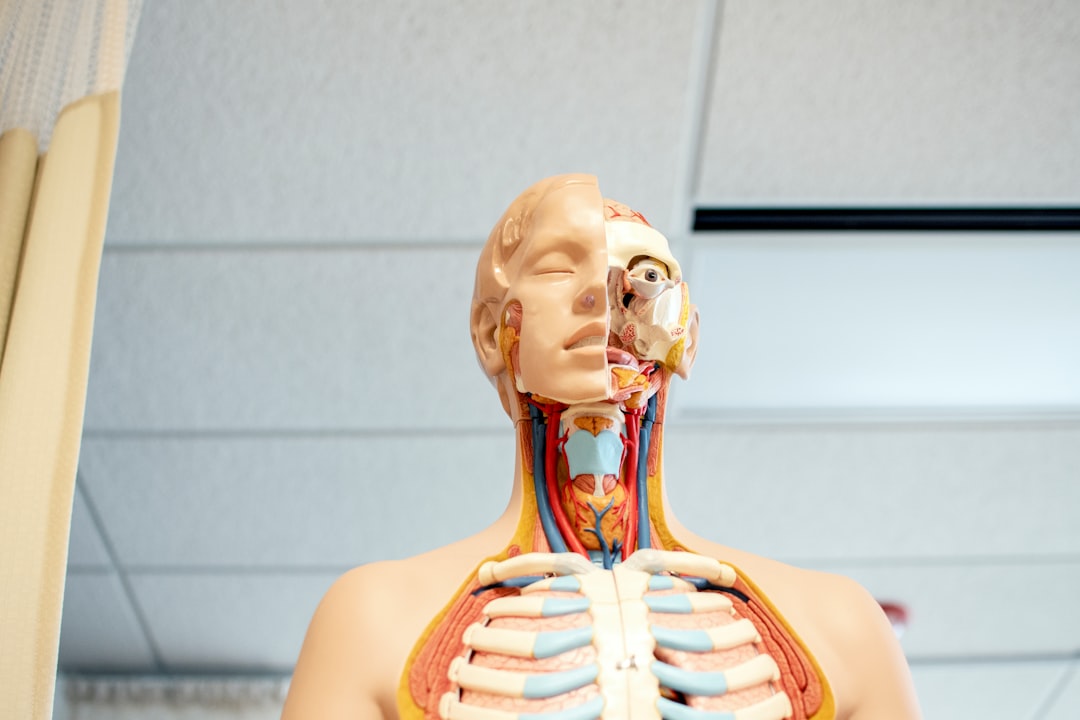
This is the section most students find hardest, and the numbers explain why. It packs four disciplines into one hour: anatomy and physiology (about 18 scored questions), biology (about 9), chemistry (about 8), and scientific reasoning (about 9). Anatomy and physiology alone is roughly 41% of the scored questions, and the test often combines content knowledge with reasoning, so you have to apply what you know rather than recite it. Study A&P first, lean on diagrams and flowcharts, and practice reading graphs and data sets. We break the whole thing down in our TEAS science guide.
English & Language Usage — 37 questions, 37 minutes
English tests grammar, sentence structure, punctuation, capitalization, and spelling. On paper it is the easiest section — exactly one minute per question — but that is the trap. Because it feels straightforward, students under-prepare and then bleed easy points on comma rules and subject-verb agreement. Review the rules systematically, practice spotting errors in sentences, and use the full minute per question.
Is the TEAS harder than the HESI A2?
It depends on your science background. Both exams cover math, science, reading, and English, but the TEAS tends to feel harder for students weak in science because of its heavy anatomy and physiology focus. The HESI A2 includes extra sections (like vocabulary) and its science is generally less dense. If you are strong in biology and anatomy, the TEAS plays to your strengths; if you are not, it exposes the gaps fast. For a head-to-head, read TEAS vs HESI: which is harder. Worth remembering: the TEAS tests foundational knowledge, while the NCLEX you take after nursing school tests clinical judgment — different beasts entirely.
How to prepare without burning out
Start with a diagnostic. Take a full-length practice test before studying anything. It shows where you are weak and where you already score well, so you stop wasting time reviewing what you have mastered.
Study with structure, not overwhelm. Break prep into sections and dedicate specific days to specific topics — cardiovascular system one day, fractions the next. Spaced repetition beats cramming, and visual aids beat text-heavy notes for science.
Practice under real conditions. Take timed practice tests with no phone and no mid-section breaks. This builds endurance and kills test-day anxiety — the more you practice under pressure, the calmer the real thing feels.
Not sure how much runway you need? Most students do well with 6–12 weeks of consistent prep at one to two hours a day, weighted toward their weak sections. Our guide to studying for the TEAS and our TEAS test prep walkthrough lay out the schedule.
Mistakes that make the TEAS feel harder than it is
Studying without a plan. Random studying gives random results. You need a schedule that covers every section systematically.
Ignoring weak subjects. Avoiding chemistry because you hate it just leaves easy points on the table. Face the weak areas early.
Memorizing instead of understanding. The TEAS tests application. Knowing valve names is useless if you cannot trace how blood moves through the heart.
Skipping timed practice. Untimed practice feels easy and lies to you. Timed practice reveals where you actually struggle.
Written by · Verified educator
Testavia editorial
Nathan Cole
RN
Medical-Surgical nurse & health writer
Meet Nathan, a registered nurse with over five years of experience in Medical-Surgical care, based in New York City. Having worked with a wide range of patients through some of their most vulnerable moments, Nathan brings a grounded, real-world perspective to his writing on healthcare. His goal is simple: to bridge the gap between medical knowledge and everyday understanding, making health topics feel less intimidating and more empowering for everyone. When he's not caring for patients, Nathan channels his passion for medicine into writing that educates, comforts and inspires.
5+
Years in Med-Surg
Medical-Surgical
Specialty
New York City
Based in