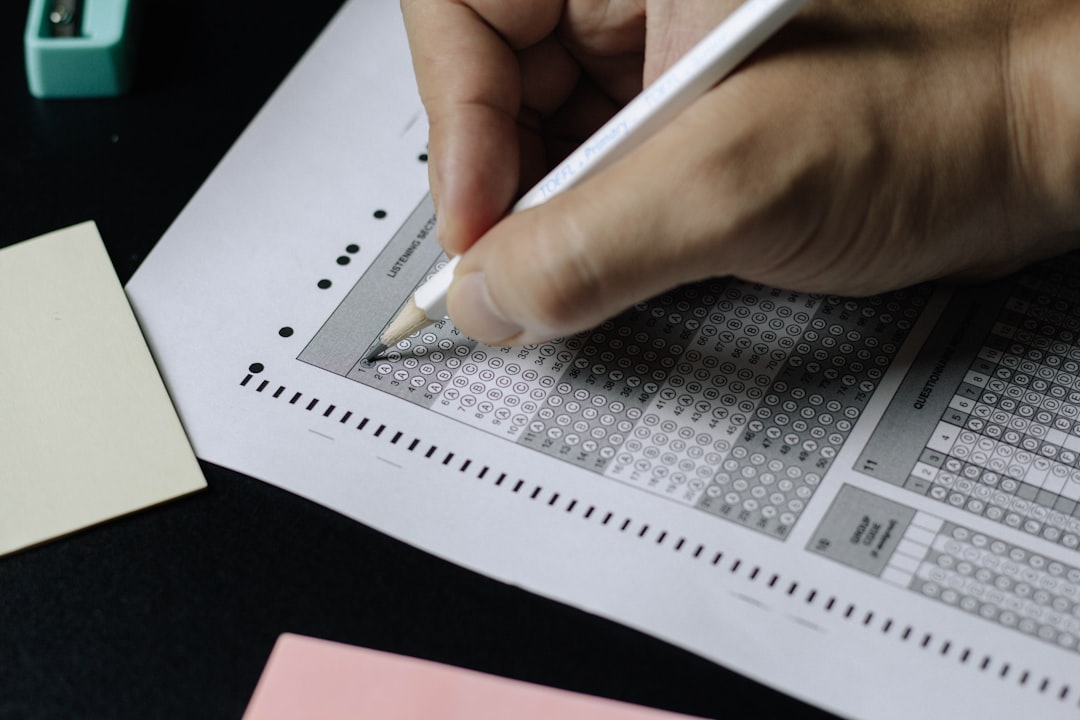
TEAS vs HESI A2: Which Nursing Entrance Exam Is Harder?
Neither the TEAS nor the HESI A2 is universally harder — they reward different strengths. The TEAS tests breadth under a tight clock; the HESI A2 goes deeper on science and runs longer. Here is how they compare section by section and which one will be harder for you.

Neither the TEAS nor the HESI A2 is objectively harder — the harder exam is the one that tests what you are weakest at. The two exams reward different strengths. The TEAS packs four sections into 170 questions and 209 minutes, so it punishes slow readers and rewards broad, general academic knowledge. The HESI A2 has more sections, goes deeper on science — especially anatomy and physiology — and runs longer, so it punishes weak A&P and thin stamina. Here is the catch: you rarely get to pick. Most programs require one specific exam, so the real question is not "which is easier" but "how do I prepare for the one my program wants." This guide compares them section by section so you know exactly where you will struggle.
The quick answer: breadth vs. depth
The cleanest way to think about it: the TEAS tests breadth, the HESI A2 tests depth. The TEAS is a fixed, four-section exam that asks for solid general knowledge across reading, math, science, and English under real time pressure. The HESI A2 is modular — schools choose which sections you sit — and the science questions go further into detail, especially in anatomy and physiology. Here is the high-level comparison:
Feature | ATI TEAS 7 | HESI A2 |
|---|---|---|
Publisher | ATI (Assessment Technologies Institute) | Elsevier / Evolve |
Structure | Fixed: 4 sections, same for everyone | Modular: schools pick which sections you take |
Total questions / time | 170 questions in 209 minutes | Varies by school (depends on sections required) |
Science emphasis | Broad: A&P, biology, chemistry, scientific reasoning | Deep: detailed A&P, biology, chemistry (and sometimes physics) |
Tests your... | Speed and range | Detail recall and stamina |
The TEAS numbers above come straight from ATI's official TEAS exam details. The HESI A2 has no single fixed length because — per Elsevier/Evolve — each nursing program decides which modules to administer, so two applicants can sit very different HESI exams.
What's on the TEAS 7
The TEAS is the same for every test-taker: four sections, 170 questions, 209 minutes — about 74 seconds per question. ATI includes a handful of unscored pretest questions in each section that look identical to the scored ones. Here is the official breakdown:
Section | Questions | Time | What it covers |
|---|---|---|---|
Reading | 45 | 55 min | Comprehension, craft and structure, integration of ideas |
Mathematics | 38 | 57 min | Numbers, algebra, measurement, and data (four-function calculator allowed) |
Science | 50 | 60 min | Anatomy & physiology, biology, chemistry, scientific reasoning |
English & Language Usage | 37 | 37 min | Grammar conventions, knowledge of language, vocabulary |
Reading and Science are the heaviest sections, and within Science, anatomy and physiology is the single largest content area. If you want the full A&P-first strategy, our TEAS science breakdown walks through the body systems ATI actually tests.
What's on the HESI A2
The HESI A2 (Admission Assessment) is modular. Elsevier offers a pool of content areas and each nursing program chooses which ones you sit, so there is no universal question count or time limit — it depends entirely on your school. The pool covers an English group (Reading Comprehension, Vocabulary & General Knowledge, Grammar), Math, and a Science group (Anatomy & Physiology, Biology, Chemistry), plus an optional Physics module. Among the academic modules whose length Elsevier publishes, Grammar is 50 questions in 50 minutes, and Anatomy & Physiology and Biology are each about 25 questions. The other academic sections fall in a similar per-section range; confirm the exact counts with your program, since they set the lineup.
The HESI A2 also includes two non-academic modules that some schools require: a Learning Style assessment and a Personality Profile. These are not pass/fail — they help programs understand how you study and work — but they add time to your testing day. The practical upshot: before you build a study plan, get your program to tell you exactly which HESI sections you are taking. Studying chemistry hard for an exam that does not include it is wasted effort. For a deeper look, see our guide to what the HESI A2 exam is.
Section by section: where each exam bites
Same subjects, different pain points. Here is how the overlapping areas compare.
Math: conceptual vs. procedural
TEAS math leans conceptual — word problems that make you set up the equation correctly before you solve it, plus a broad range of topics. HESI math is more procedural: dosage-style calculations, metric conversions, and ratio setups that follow predictable patterns once you have drilled the formulas. TEAS math is harder if you freeze on applying concepts to new situations; HESI math is harder if you have not memorized the conversion formulas.
Science: a little of everything vs. deep A&P
This is the biggest split. The TEAS spreads science across A&P, biology, chemistry, and scientific reasoning, so you need general competence everywhere and cannot just lean on one strength. The HESI A2 goes deeper into anatomy and physiology specifically — expect detailed questions about structures, functions, and processes rather than surface recall. TEAS science is harder if your biology and chemistry are rusty; HESI science is harder if you have not studied A&P recently or thoroughly.
Reading & English: speed vs. medical vocabulary
TEAS reading is one of the heaviest sections and is genuinely time-pressured — a lot of passages in 55 minutes. HESI reading covers similar comprehension and inference skills but tends to feel more manageable on the clock. The English side splits too: the TEAS folds vocabulary into reading and a standard grammar section, while the HESI A2 has a dedicated vocabulary module that leans on medical terminology. TEAS reading is harder if you read slowly; HESI is harder if medical vocabulary is new to you.
Time pressure vs. endurance
The TEAS gives you about 74 seconds per question — fine if you trust your first instinct, brutal if you second-guess. The HESI A2 generally allows more time per question, but because schools can stack many modules, your total testing day can run long and demand real stamina. The TEAS punishes slow, indecisive test-takers; the HESI A2 punishes people who lose focus over a long session.

So which one is harder for you?
Stop trying to rank the exams in the abstract and rank them against yourself. The TEAS is likely harder for you if you:
Read slowly or struggle with comprehension under time pressure.
Have thin or rusty general science across biology and chemistry.
Second-guess yourself and run out of time.
The HESI A2 is likely harder for you if you:
Have not taken anatomy and physiology recently or in depth.
Are unfamiliar with medical vocabulary.
Lose focus or make careless errors during long testing sessions.
In most cases you will not choose anyway — your program does. Check your school requirements before you spend a dime on prep, because most BSN and ADN programs require the TEAS while some programs (often those with heavier science prerequisites) require the HESI A2. Either way, the move is the same: take a diagnostic, find your weak section, and study to it.
Written by · Verified educator
Testavia editorial
Nathan Cole
RN
Medical-Surgical nurse & health writer
Meet Nathan, a registered nurse with over five years of experience in Medical-Surgical care, based in New York City. Having worked with a wide range of patients through some of their most vulnerable moments, Nathan brings a grounded, real-world perspective to his writing on healthcare. His goal is simple: to bridge the gap between medical knowledge and everyday understanding, making health topics feel less intimidating and more empowering for everyone. When he's not caring for patients, Nathan channels his passion for medicine into writing that educates, comforts and inspires.
5+
Years in Med-Surg
Medical-Surgical
Specialty
New York City
Based in