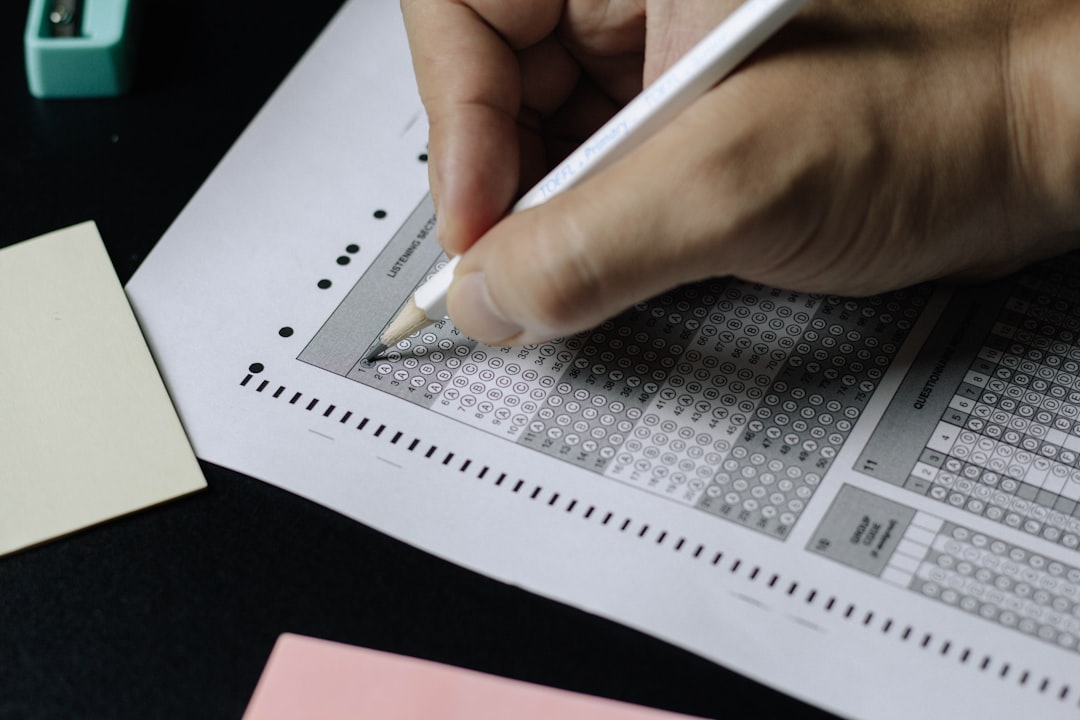
TEAS vs NCLEX: Which Nursing Exam Is Harder?
The TEAS and NCLEX are not competitors — the TEAS is the entrance exam before nursing school, the NCLEX is the licensure exam after. Here is how they actually differ in format, content, and difficulty, plus an honest answer on which one should scare you more.

Here is the honest answer most people skip: the TEAS and the NCLEX are not really competitors. The TEAS is the entrance exam you take to get into nursing school, and the NCLEX is the licensure exam you take after you graduate to legally practice as a nurse. They sit at opposite ends of your training, test different things, and are scored in completely different ways. If you are asking which is harder, the consensus is the NCLEX — it tests clinical judgment under real stakes, not recall. But the TEAS trips up more students than people admit, especially its science section under the clock. This guide breaks down both exams side by side so you know exactly what each one is and how to beat it.
The TEAS and NCLEX are not competitors
Think of nursing as having two gates. The TEAS (Test of Essential Academic Skills) is gate one — most nursing programs require it for admission, and it measures whether you have the academic foundation to survive a rigorous program. The NCLEX (National Council Licensure Examination) is gate two — you sit for it only after you graduate from an accredited program, and passing it is what turns your degree into a license. You will never take them in the same year, and no employer will ever ask about your TEAS score once you are in. So "which is harder" is a little like comparing a driving permit test to a road test: related, sequential, but built for entirely different purposes.
TEAS vs NCLEX: the head-to-head comparison
The fastest way to see the difference is side by side. Question counts and timing below are verified against ATI's official TEAS exam details and the NCSBN NCLEX program.
Factor | TEAS | NCLEX |
|---|---|---|
Purpose | Entrance exam — get into nursing school | Licensure exam — practice as a nurse |
When you take it | Before nursing school | After you graduate |
Format | Fixed-length, multiple choice | Computer-adaptive (CAT), mixed item types |
Questions | 170 total (150 scored, 20 unscored) | 85 to 150 items (varies per candidate) |
Time limit | 209 minutes (~3.5 hours) | Up to 5 hours (including breaks) |
What it tests | Reading, math, science, English — high-school level | Clinical judgment, patient safety, nursing decisions |
Scoring | Percentage score; each school sets its own cutoff | Pass/fail — no percentage, adaptive cutoff |

What the TEAS actually tests
The TEAS is a fixed-length, multiple-choice exam of 170 questions, of which 150 are scored (the other 20 are unscored pretest items ATI uses to trial future questions). You get 209 minutes total — roughly three and a half hours — split across four separately timed sections:
Reading — key ideas, details, text structure, and interpreting graphs and charts.
Mathematics — whole numbers, fractions, decimals, basic algebra, and data interpretation.
Science — anatomy and physiology, biology, chemistry, and scientific reasoning. This is the section most students fear.
English and Language Usage — grammar, punctuation, sentence structure, and vocabulary.
The difficulty here is breadth plus a clock, not depth. Questions are mostly recall and application of high-school-level material: you either know the role of a cell organelle or you do not. The trap is spreading yourself thin across four subjects and running out of time on the science block. If you want the full breakdown, see our guide to the TEAS science section, which is where most of the points are won or lost.
What the NCLEX actually tests
The NCLEX is a different animal. It uses computerized adaptive testing (CAT): the difficulty of each question adjusts to your previous answers. Answer correctly and the next item gets harder; miss one and the next gets easier. The exam ends when the computer is confident — with 95% certainty — that you are clearly above or below the passing standard. Because of that, candidates answer anywhere from 85 to 150 items, and you have up to five hours, breaks included. There are two versions: the NCLEX-RN for graduates of ADN or BSN programs, and the NCLEX-PN for practical and vocational nursing graduates.
Content is organized around four "Client Needs" categories — Safe and Effective Care Environment, Health Promotion and Maintenance, Psychosocial Integrity, and Physiological Integrity. Since the Next Generation NCLEX (NGN) launched on April 1, 2023, the exam also includes newer item types built to measure clinical judgment: case studies, extended multiple response, drag-and-drop ordering, and matrix questions, alongside the familiar multiple-choice and select-all-that-apply formats. The point is not whether you memorized a fact — it is whether you can prioritize care and make a safe decision in a realistic patient scenario. For more on the name and what it stands for, see what NCLEX stands for.
So which one is harder?
For most nurses, the NCLEX is the harder exam — and the reasons are worth separating, because the two tests are hard in opposite ways:
The TEAS is hard in breadth and time. Four subjects, recall-heavy, on a tight clock. You can over-prepare for it with content review and timed practice, because the material is finite and predictable.
The NCLEX is hard in depth and stakes. It asks you to synthesize everything from nursing school and apply it to ambiguous situations where several answers look right but only one is safest. The adaptive format keeps you near the edge of your ability the entire time, which is psychologically draining.
The stakes raise the pressure. Failing the TEAS delays your admission; failing the NCLEX stalls a career you have already spent years and tuition building. That weight alone makes the NCLEX feel heavier.
That said, "harder" depends on you. A strong test-taker who is rusty on high-school science can find the TEAS genuinely tough, while a clinically sharp graduate may pass the NCLEX in the minimum 85 items. The right takeaway is not to rank them — it is to prepare for each on its own terms.

How to prepare for each (the strategies are different)
You cannot run the same study plan for both. The TEAS rewards content review; the NCLEX rewards reasoning practice.
For the TEAS: give yourself 6 to 8 weeks, start with a diagnostic to find weak areas, then refresh high-school math, science, and English. Drill timed practice questions so the pacing becomes automatic — the science section especially.
For the NCLEX: begin right after graduation while your knowledge is fresh. Live in a quality question bank, study the rationale behind every right and wrong answer, and focus on applying nursing content — pharmacology, prioritization, interventions — rather than re-reading textbooks. See our breakdown of how to approach NCLEX questions for the formats you will face.
Written by · Verified educator
Testavia editorial
Nathan Cole
RN
Medical-Surgical nurse & health writer
Meet Nathan, a registered nurse with over five years of experience in Medical-Surgical care, based in New York City. Having worked with a wide range of patients through some of their most vulnerable moments, Nathan brings a grounded, real-world perspective to his writing on healthcare. His goal is simple: to bridge the gap between medical knowledge and everyday understanding, making health topics feel less intimidating and more empowering for everyone. When he's not caring for patients, Nathan channels his passion for medicine into writing that educates, comforts and inspires.
5+
Years in Med-Surg
Medical-Surgical
Specialty
New York City
Based in