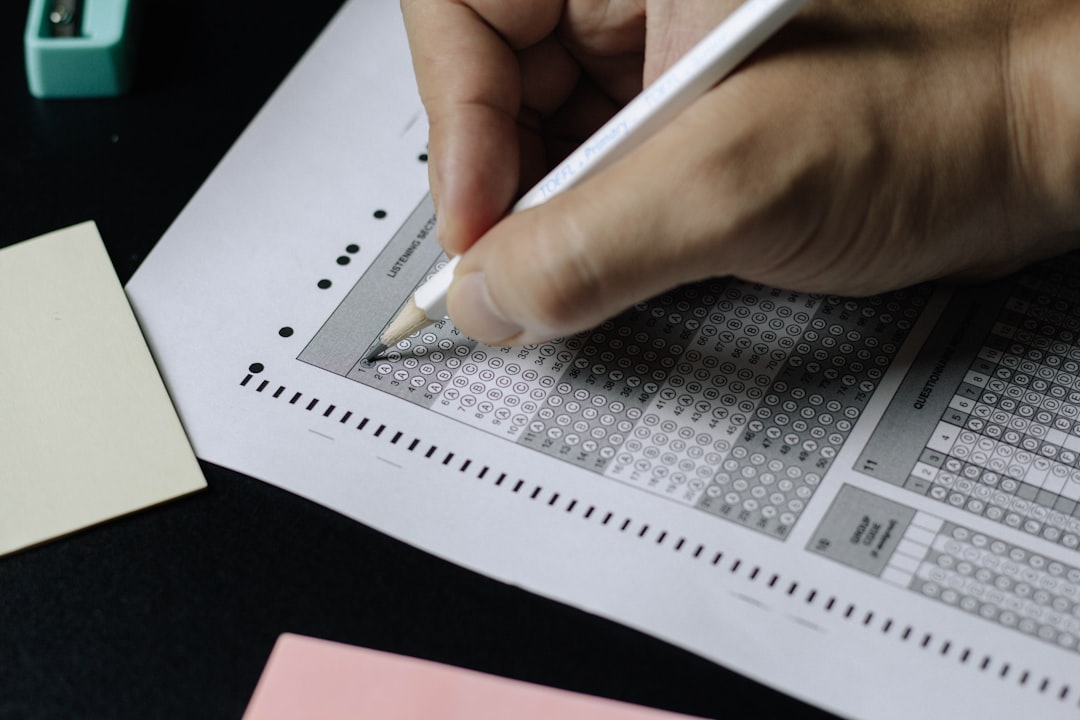
TEAS 7 Reading Section: Strategies to Pass Under Time Pressure
The TEAS 7 Reading section is 45 questions in 55 minutes across Key Ideas & Details, Craft & Structure, and Integration of Knowledge & Ideas. Here is the official ATI breakdown, the highest-yield skills, the wrong-answer traps, and a timing plan so you never leave a question blank.

The TEAS 7 Reading section gives you 45 questions in 55 minutes — about 73 seconds each — and that clock includes the time it takes to read each passage. Reading comprehension sounds like something you either have or you don't, but that is the wrong way to think about it. On the TEAS, reading is a trainable skill: find the main idea fast, recognize how a passage is built, infer only from the evidence on the page, and eliminate the wrong answers ATI deliberately makes look right. The content is predictable, and two of the three skill areas cover most of your score. Here is exactly what is tested, which skills earn the most points, the traps that cost students questions, and a timing plan so you finish the section.
What's actually on the TEAS 7 Reading section
You get 45 questions and 55 minutes. Of those, 39 are scored and 6 are unscored pretest items that ATI uses to trial future questions. You will not know which are which, so treat every question as if it counts. According to ATI's official TEAS exam details, the 39 scored questions split across three skill areas like this:
Skill area | Scored questions | Share of section | What it covers |
|---|---|---|---|
Key Ideas & Details | 15 | ~38% | Main idea, supporting details, author's purpose, fact vs. opinion, following directions |
Craft & Structure | 9 | ~23% | Text structure, point of view, tone, word choice, vocabulary in context |
Integration of Knowledge & Ideas | 15 | ~38% | Inferences, evaluating arguments and evidence, comparing sources, multi-step directions |
Note the weighting: Key Ideas & Details and Integration of Knowledge & Ideas are tied as the largest areas at 15 scored questions each, so comprehension and inference together drive about three-quarters of your score. Craft & Structure is the smallest at 9. If you can lock down main idea, evidence-based inference, and the handful of structure-and-tone patterns ATI reuses, you have covered most of the test. The real constraint is time: 73 seconds per question sounds generous until you remember a multi-paragraph passage can eat 60–90 of those seconds before you answer anything.

Key Ideas & Details: understanding what you read
Fifteen questions test whether you actually grasped the passage. The skills here are concrete and high-yield:
Main idea vs. supporting details. The main idea is the whole passage's central point; supporting details are the facts and examples that back it up. The classic trap is choosing a detail as the main idea — it is true, but too narrow. Ask: "What is this entire passage about?" The right answer covers everything, not one paragraph.
Author's purpose. To inform, persuade, entertain, or explain. Most TEAS passages are informative or explanatory; persuasive ones show up occasionally. Read the tone — neutral facts mean inform, an argued position means persuade.
Fact vs. opinion. Facts can be verified; opinions are judgments. Ask "Can this be proven true or false?" Watch for opinion signal words: best, worst, should, believe, think, feel.
Craft & Structure: how authors build a passage
Nine questions test how a passage is organized and why the author made specific choices. Three patterns dominate. First, text structure — chronological (first, next, finally), cause and effect (because, therefore, as a result), compare and contrast (however, whereas, unlike), problem and solution, or descriptive. Signal words give the structure away, so train yourself to spot them. Second, point of view and tone — first, second, or third person, and the author's attitude (neutral, critical, optimistic, concerned). Tone lives in word choice: "the policy failed miserably" is critical; "the policy showed mixed results" is neutral. Third, vocabulary in context — you are never asked to define a word cold, only what it means as used. Substitute each answer choice into the sentence and keep the one that fits. If a medication has a "deleterious effect on liver function," substitution rules out "beneficial" and lands you on "harmful."
Integration of Knowledge & Ideas: reading between the lines
Fifteen questions — tied for the largest area — test critical thinking. This is where careless readers lose the most points, because the answers are not stated outright. An inference is a logical conclusion built from evidence in the passage plus one small step of reasoning. If a passage notes a patient's heart rate rose from 72 to 110, respiratory rate from 16 to 24, and the patient feels anxious, you can infer distress — even though no sentence says it. The rule that keeps you safe: base every inference on the passage, never on outside knowledge. You may know hypertension causes heart disease, but if the passage does not mention it, it cannot be the answer. The same area asks you to evaluate arguments and evidence — prefer specific data ("handwashing cuts infections 40%") over vague claims ("many people believe handwashing matters") — and to follow multi-step directions in order. Number the steps mentally and do not rearrange them.
Common reading mistakes that cost points
Reading too slowly and running out of time. Reading every word at full attention is how students leave questions blank. Skim for the main idea first, then read closely only when answering.
Answering from what you already know. If the passage does not say it, you cannot choose it. Base every answer on passage evidence and ignore outside knowledge.
Picking the first answer that sounds good. TEAS wrong answers are engineered to look partially correct. Read all four, eliminate methodically, and choose the best — not merely a good — option.
Overthinking inferences. A correct inference is one small logical step, not a chain of assumptions. Stay close to the text.
Misreading the question. "Which is NOT supported?" is the opposite of "Which IS supported?" Circle the qualifiers — NOT, EXCEPT, BEST, MOST — before you look at the choices.

A time-management plan for 45 questions in 55 minutes
The math is tight — about 73 seconds per question, and passage-reading comes out of that budget. Run the same routine on every question so pacing becomes automatic instead of a decision:
Skim the passage (30–45 sec). Get the topic and main idea. Do not try to memorize details yet — you will come back for them.
Read the question carefully (10 sec). Underline the key words so you know exactly what is being asked, including any NOT or EXCEPT.
Scan back for the answer (20–30 sec). Find the relevant line and reread just that section closely rather than the whole passage.
Eliminate wrong answers (15–20 sec). Cross out the clearly wrong choices, compare what remains, and commit to the best one.
Do not linger — flag and move on. Stuck after about 90 seconds? Mark it, guess, and come back if time allows. A blank is worth zero; a guess might score.
Practice the pacing, not just the content. Do timed reading sets regularly so test-day speed feels familiar, not frantic.
Want the rest of the exam mapped the same way? See the TEAS science study guide, our broader TEAS test-prep plan, and an honest take on whether the ATI TEAS is hard. New to the exam? Start with how to study for the TEAS test.
Written by · Verified educator
Testavia editorial
Nathan Cole
RN
Medical-Surgical nurse & health writer
Meet Nathan, a registered nurse with over five years of experience in Medical-Surgical care, based in New York City. Having worked with a wide range of patients through some of their most vulnerable moments, Nathan brings a grounded, real-world perspective to his writing on healthcare. His goal is simple: to bridge the gap between medical knowledge and everyday understanding, making health topics feel less intimidating and more empowering for everyone. When he's not caring for patients, Nathan channels his passion for medicine into writing that educates, comforts and inspires.
5+
Years in Med-Surg
Medical-Surgical
Specialty
New York City
Based in