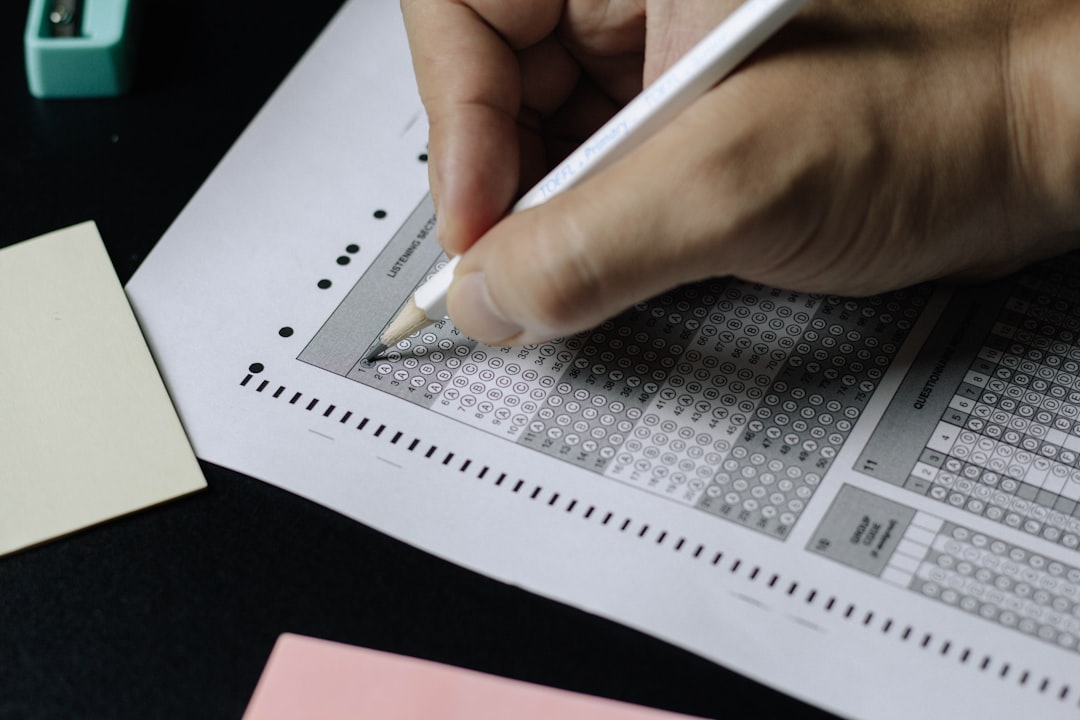
7 TEAS Myths That Are Quietly Sabotaging Your Score
Bad TEAS advice spreads fast in study groups and Reddit threads, and some of it costs you real points. Here are seven of the most common ATI TEAS 7 myths — about cramming, practice tests, the English section, calculators, and retakes — and the reality behind each one.

Bad TEAS advice is everywhere — in Facebook groups, Reddit threads, and from classmates who swear they know how the exam works. The dangerous part is that most TEAS myths sound completely reasonable, which is exactly why students carry them into prep without questioning. They are not fringe conspiracy theories; they are the everyday beliefs that quietly cost people points. Below are seven of the most common ones, each paired with what is actually true — verified against ATI where the facts matter. If you are studying for the ATI TEAS 7, read this before you spend another hour on the wrong thing.
Myth 1: "I did fine in high school science, so I can skip the science section"
This is the most common myth, and it produces the most unpleasant surprises on test day. The reality: the TEAS 7 Science section is not a general-knowledge quiz. It is 50 questions in 60 minutes across anatomy and physiology, biology, chemistry, and scientific reasoning — and it tests application under time pressure, not surface recall. Anatomy and physiology alone accounts for 18 of the scored questions, the largest single area. Expect cell membrane transport, endocrine feedback loops, atomic structure, and experimental design. If your last biology class was two years ago, familiarity is not preparation. Review it. For a full map of what the section covers and where students lose points, see our TEAS science breakdown.
Myth 2: "The more practice tests I take, the higher my score"
Volume is not strategy. The reality: taking fifteen practice tests back-to-back without reviewing them is one of the most efficient ways to waste study time. A practice test is a diagnostic tool — its job is to show you what is broken so you can fix it. The students who improve fastest are not the ones taking the most tests; they are the ones who spend as much time reviewing wrong answers as they spent taking the test, building an error log and sorting each miss into a knowledge gap, a misread question, or a second-guess. Each needs a different fix. More tests without more review is just practicing your mistakes. We break down how to use practice tests correctly in our guide to practice test mistakes.
Myth 3: "The English section is easy — skip it and focus on science"
English is the section students most consistently under-prepare — and then lose points on. The reality: the English and Language Usage section is 37 questions in 37 minutes, testing grammar, sentence structure, punctuation, spelling conventions, and vocabulary in context, with questions written to trip up students who assume they already know this. Every section feeds your composite TEAS score, and that composite is what nursing programs see. A weak English score drags your number down just as effectively as a weak science score. Dismissing it because it "sounds easy" is exactly the assumption the test is built to punish.
Myth 4: "Cramming the night before will help"
It will not, and the research is not ambiguous. The reality: cramming produces short-term recall — the kind that evaporates under exam stress before you finish reading the first question. What you remember at 2 a.m. is not reliably what you retrieve at 9 a.m. in a testing center with your heart rate up and the clock running. What works is distributed practice: smaller amounts studied consistently over several weeks. Your brain consolidates information during sleep, and an all-nighter actively works against that. The night before? Review your notes lightly, sort your test-day logistics, and sleep. That is the move. If you need a system, start with how to study for the TEAS test.
Myth 5: "A high practice-test score means I am ready"
This one hands students false confidence right when they need the real kind. The reality: practice scores are estimates, not guarantees. If you took the test in a relaxed setting, paused mid-test, looked things up, or repeated it and remembered questions, your score is inflated — it does not reflect a timed, proctored, single-attempt environment. Real exam conditions add pressure, time sensitivity, and fatigue that a quiet afternoon at home does not. A high practice score means your knowledge is in a good place; it does not mean you are done. Make your final practice run simulate test day: timed, quiet room, phone away, no pausing. For the score that matters and how programs read it, see what the TEAS passing score really is.
Myth 6: "You need to bring your own calculator — or there is no calculator at all"
Students panic over this one in both directions. The reality: a calculator is provided on the TEAS 7 math section, and you may not bring your own. According to ATI's calculator policy, the online exam has a four-function drop-down calculator built in (add, subtract, multiply, divide), and on the paper version the proctor provides one. There is no scientific or graphing calculator — just the basics — so do not expect to lean on a fancy device. The smart move: practice with the same on-screen calculator inside your prep materials so the interface is familiar on test day, and keep drilling mental math and metric conversions, because four functions will not rescue a shaky setup.
Myth 7: "If you fail the TEAS, your nursing career is over"
It is not — and believing this creates the exact test anxiety that makes students perform below their ability. The reality: the ATI TEAS 7 can be retaken. Per ATI's retake policy, when you test directly through ATI there is a 14-day minimum wait between attempts. But the rules that usually bind you are set by your nursing program, not ATI — each institution sets its own attempt limit, waiting period (often 30 days), and minimum score. So there is no single universal rule; always check the specific policy of the program you are applying to, not a number you read in a forum. A failed attempt is not a verdict. It is precise data on where your preparation fell short, which is far more useful than guessing. Your TEAS score is one data point in an application, not the final word on whether you become a nurse.
The pattern behind every myth
Look at the seven together and the same thread runs through all of them: each one is a way of making preparation feel more manageable than it is. Telling yourself English is easy means you do not have to study it. Believing practice tests alone are enough means you skip the harder work of reviewing mistakes. Assuming high-school knowledge still holds means you do not have to start over. The TEAS rewards students who do the uncomfortable work — who study the sections they hate, review wrong answers instead of moving on, and take the exam seriously from day one. That is the best news possible, because it means the exam is coachable: strategy and preparation move the needle more than raw intelligence.
Written by · Verified educator
Testavia editorial
Nathan Cole
RN
Medical-Surgical nurse & health writer
Meet Nathan, a registered nurse with over five years of experience in Medical-Surgical care, based in New York City. Having worked with a wide range of patients through some of their most vulnerable moments, Nathan brings a grounded, real-world perspective to his writing on healthcare. His goal is simple: to bridge the gap between medical knowledge and everyday understanding, making health topics feel less intimidating and more empowering for everyone. When he's not caring for patients, Nathan channels his passion for medicine into writing that educates, comforts and inspires.
5+
Years in Med-Surg
Medical-Surgical
Specialty
New York City
Based in